
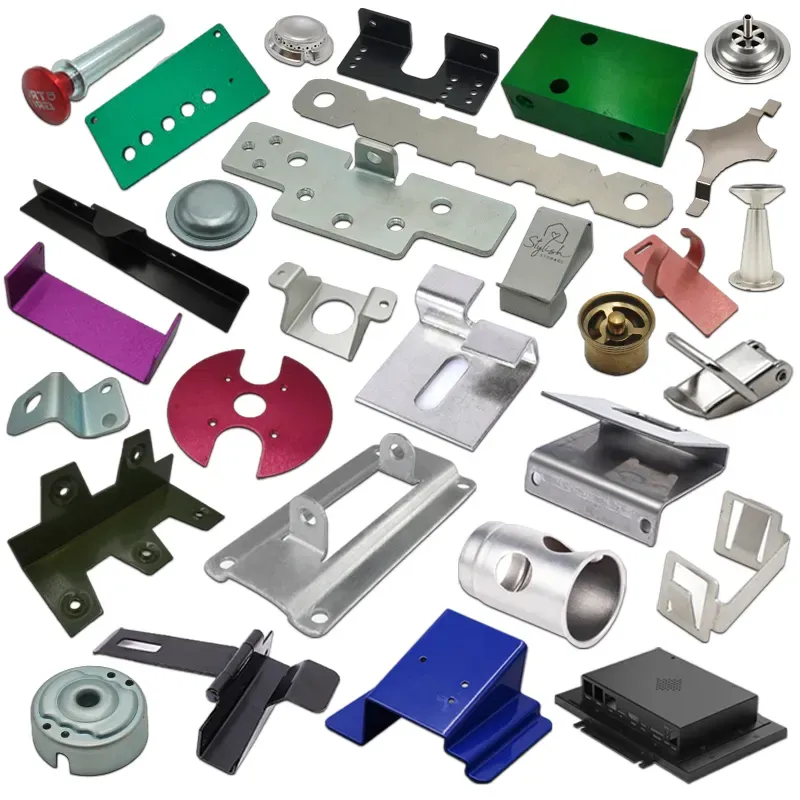
The semiconductor industry stands as one of the most precision-demanding sectors in modern manufacturing, where tolerances measured in nanometers can determine the success or failure of cutting-edge technology. At the heart of this industry lies custom cnc machining, a manufacturing process that has become indispensable for creating the ultra-precise components required in semiconductor production equipment, testing apparatus, and fabrication tools. The intricate relationship between custom cnc machining and semiconductor manufacturing represents a symbiotic evolution that has driven technological advancement for decades.
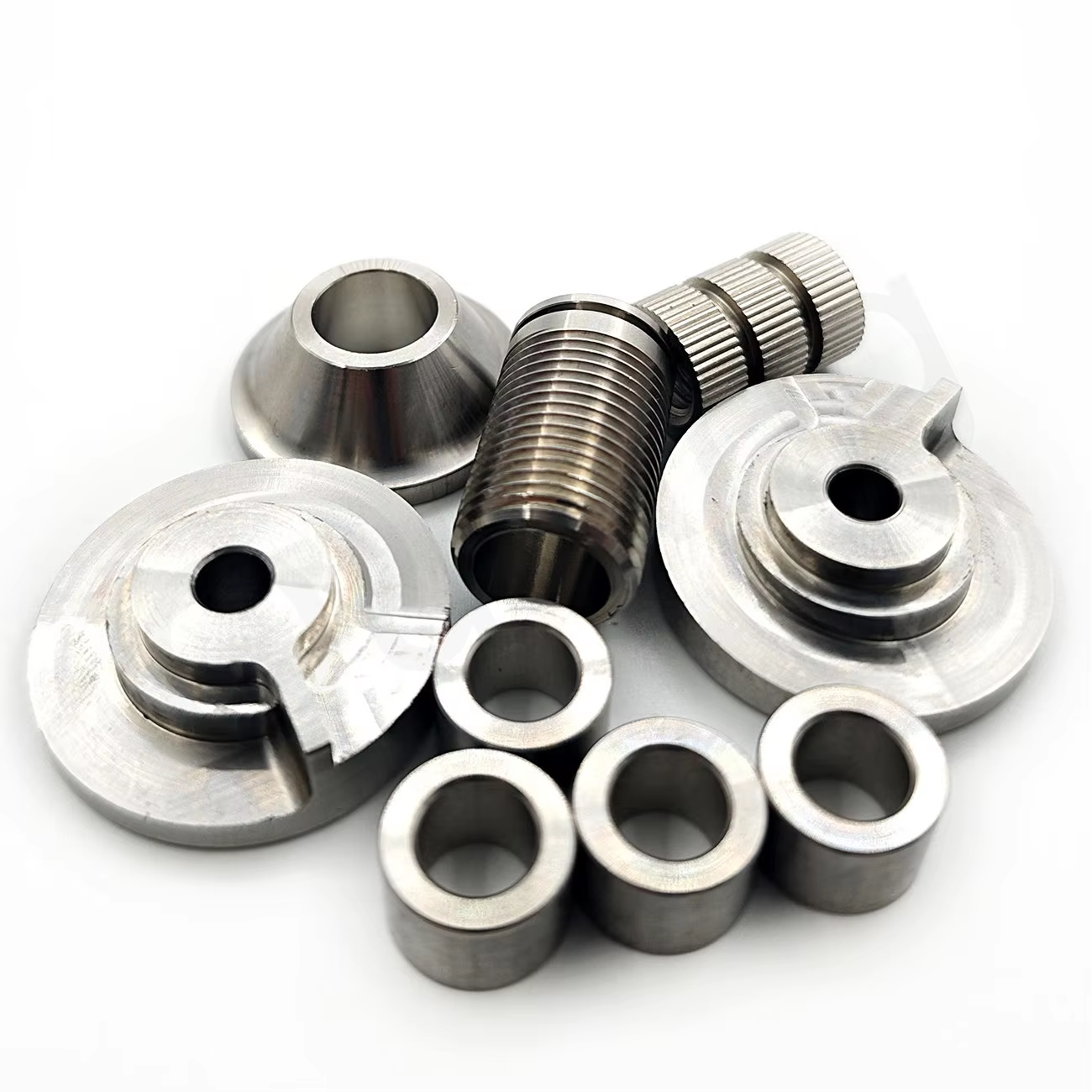
The semiconductor fabrication process demands components that meet extraordinary specifications, often requiring surface finishes measured in microinches and dimensional accuracies that push the boundaries of mechanical engineering. Custom cnc machining provides the technological foundation necessary to achieve these demanding requirements, enabling manufacturers to produce components that would be impossible to create through conventional manufacturing methods. This precision manufacturing capability has become so integral to semiconductor production that virtually every major semiconductor facility worldwide relies on custom cnc machining for critical components and tooling.
Precision Requirements in Semiconductor Manufacturing
Ultra-High Tolerance Standards
Semiconductor manufacturing environments operate under tolerance requirements that exceed those found in virtually any other industry, with many components requiring accuracies within plus or minus one micron. Custom cnc machining has evolved to meet these extraordinary demands through advanced machine tools, sophisticated measurement systems, and rigorous process controls that ensure consistent results across thousands of identical parts. The ability to maintain such tight tolerances consistently makes custom cnc machining an essential technology for semiconductor component production.
These precision requirements extend beyond simple dimensional accuracy to include surface finish specifications, geometric tolerances, and material property consistency that directly impact semiconductor device performance. Custom cnc machining operations must account for thermal expansion, tool wear patterns, and environmental variations that could affect part quality, requiring sophisticated process monitoring and adaptive control systems. The investment in precision custom cnc machining equipment represents a significant portion of semiconductor manufacturing infrastructure costs, reflecting the critical importance of this technology.
Surface Finish and Contamination Control
The semiconductor industry’s stringent cleanliness requirements have driven innovations in custom cnc machining techniques, particularly in areas of surface finish achievement and contamination prevention. Machined surfaces in semiconductor applications often require mirror-like finishes with roughness values measured in nanometers, achievable only through specialized custom cnc machining processes that incorporate diamond tooling, ultra-stable machine platforms, and controlled cutting environments.
Contamination control during custom cnc machining operations has become equally critical, as microscopic particles generated during machining can compromise semiconductor device performance if not properly managed. Advanced custom cnc machining facilities incorporate clean room protocols, specialized coolant systems, and particle monitoring equipment to ensure that machined components meet semiconductor industry cleanliness standards. These contamination control measures have become standard practice in high-end custom cnc machining operations serving the semiconductor market.
Critical Components Produced Through Custom CNC Machining
Wafer Handling and Processing Equipment
The delicate nature of semiconductor wafers requires specialized handling equipment that must combine extreme precision with absolute reliability, making custom cnc machining the preferred manufacturing method for these critical components. Wafer chucks, end effectors, and positioning systems all rely on custom cnc machining to achieve the dimensional accuracy and surface quality necessary for safe wafer handling throughout the fabrication process. The unique geometries and material requirements of wafer handling equipment often exceed the capabilities of standard manufacturing processes, necessitating the flexibility and precision that custom cnc machining provides.
Temperature control components within wafer processing equipment represent another area where custom cnc machining proves indispensable, as these systems must maintain thermal uniformity across large surfaces while withstanding the corrosive chemicals used in semiconductor processing. The complex internal geometries required for optimal heat transfer can only be achieved through advanced custom cnc machining techniques that allow for intricate channel patterns and surface modifications that enhance thermal performance.
Photolithography System Components
Photolithography equipment represents perhaps the most demanding application for custom cnc machining within the semiconductor industry, as these systems require optical precision components that enable the projection of circuit patterns onto semiconductor wafers with nanometer accuracy. Lens mounts, mirror supports, and alignment mechanisms must maintain their precise positioning under varying thermal conditions and mechanical loads, requiring custom cnc machining processes that can achieve both dimensional accuracy and long-term stability.
The reticle handling systems within photolithography equipment demand custom cnc machining capabilities that can produce components with exceptional flatness and parallelism, as any deviation from perfect geometry can result in pattern distortion across the wafer surface. These components often incorporate complex kinematic mounting systems and fine adjustment mechanisms that require the geometric precision and surface quality achievable only through advanced custom cnc machining techniques. The economic impact of photolithography system downtime makes reliability a critical factor, further emphasizing the importance of high-quality custom cnc machining in component production.
Material Considerations for Semiconductor Applications
Specialized Alloys and Ceramics
The harsh chemical environments encountered in semiconductor processing have driven the development of specialized materials that present unique challenges for custom cnc machining operations. Ultra-pure aluminum alloys, corrosion-resistant stainless steel grades, and advanced ceramic materials all require modified machining approaches that account for their specific material properties and the stringent purity requirements of semiconductor applications.
Ceramic materials used in semiconductor equipment, including aluminum oxide, silicon carbide, and advanced technical ceramics, demand specialized custom cnc machining techniques that can handle the hardness and brittleness of these materials while maintaining the precision required for semiconductor applications. The development of diamond tooling, ultrasonic machining assistance, and advanced grinding techniques has expanded the capabilities of custom cnc machining to include these challenging materials. Material selection for semiconductor applications often prioritizes chemical compatibility and thermal stability over machinability, requiring custom cnc machining operations to adapt their processes accordingly.
Purity and Outgassing Requirements
Semiconductor manufacturing environments operate under ultra-high vacuum conditions that place strict limits on material outgassing, making material selection and processing methods critical factors in custom cnc machining operations. Components destined for vacuum service must be manufactured from materials with minimal volatile content and processed using techniques that do not introduce contaminating substances, requirements that significantly impact custom cnc machining procedures and material handling protocols.
The cleaning and preparation procedures required for semiconductor components add complexity to custom cnc machining operations, as parts must often undergo specialized cleaning processes that remove all traces of machining fluids, particles, and surface contaminants. These post-machining treatments can affect dimensional stability and surface properties, requiring custom cnc machining processes to account for subsequent processing steps in their initial planning and execution. Quality control procedures for semiconductor components typically include outgassing tests and contamination analysis that verify the suitability of custom cnc machining processes.
Advanced Machining Technologies in Semiconductor Manufacturing
Multi-Axis Machining Capabilities
The complex geometries required in semiconductor equipment components have driven the adoption of advanced multi-axis custom cnc machining systems that can produce intricate shapes in single setups, minimizing the accumulation of positional errors that occurs with multiple setups. Five-axis and six-axis machining centers enable custom cnc machining operations to create components with compound angles, internal features, and complex surface contours that would be impossible or impractical to produce using conventional three-axis equipment.
Simultaneous multi-axis machining capabilities allow custom cnc machining operations to maintain superior surface finishes and dimensional accuracy across complex geometries by eliminating tool marks and setup variations that can compromise part quality. The programming complexity associated with multi-axis custom cnc machining has been addressed through advanced CAM software systems that optimize tool paths for both efficiency and quality, enabling semiconductor component manufacturers to fully utilize these advanced machining capabilities.
In-Process Measurement and Adaptive Control
The tight tolerances required in semiconductor applications have necessitated the integration of in-process measurement systems within custom cnc machining operations, allowing real-time monitoring and correction of dimensional variations during the machining process. Laser interferometry, touch probe systems, and non-contact measurement technologies enable custom cnc machining centers to verify part dimensions and make adaptive corrections that maintain precision throughout the machining cycle.
Adaptive control systems in advanced custom cnc machining equipment can respond to variations in material properties, tool wear, and environmental conditions by automatically adjusting cutting parameters to maintain consistent part quality. These intelligent machining systems represent the convergence of custom cnc machining technology with advanced sensors and control algorithms, enabling unprecedented levels of precision and consistency in semiconductor component production. The data collected through these measurement systems also provides valuable feedback for process optimization and predictive maintenance programs.
Quality Assurance and Metrology
Coordinate Measuring Machines and Precision Inspection
Quality verification of components produced through custom cnc machining for semiconductor applications requires measurement capabilities that match or exceed the precision of the manufacturing process itself. Coordinate measuring machines with nanometer resolution capabilities have become standard equipment in facilities specializing in custom cnc machining for semiconductor applications, enabling comprehensive dimensional verification of complex geometries and tight tolerance requirements.
The integration of measurement protocols with custom cnc machining processes has evolved to include statistical process control methods that monitor machining performance and predict when process adjustments may be needed. Advanced metrology techniques, including optical measurement systems and scanning probe microscopy, provide detailed surface characterization capabilities that complement traditional dimensional measurement methods. The investment in precision measurement equipment often represents a significant portion of the total cost for custom cnc machining facilities serving semiconductor customers.
Traceability and Documentation Requirements
Semiconductor industry quality standards mandate comprehensive documentation and traceability for all components used in production equipment, placing additional requirements on custom cnc machining operations beyond the achievement of dimensional accuracy. Material certifications, process records, and measurement data must be maintained and made available to demonstrate compliance with industry standards and customer specifications.
The documentation requirements for custom cnc machining in semiconductor applications extend to tool records, machine maintenance histories, and environmental monitoring data that can affect part quality. Quality management systems in advanced custom cnc machining facilities incorporate digital record keeping and data analysis capabilities that support these documentation requirements while providing insights into process performance and improvement opportunities. Regulatory compliance and customer audit requirements have driven the standardization of documentation practices across the custom cnc machining industry.
Economic Impact and Market Dynamics
Capital Investment Requirements
The precision requirements of semiconductor applications have driven significant capital investments in advanced custom cnc machining equipment, with individual machines often costing millions of dollars due to their specialized capabilities and precision specifications. The return on investment for such equipment depends heavily on the ability to maintain high utilization rates while meeting the demanding quality standards required by semiconductor customers.
Market demand for semiconductor devices continues to drive growth in custom cnc machining services, as new device technologies require increasingly sophisticated production equipment with components that push the boundaries of manufacturing precision. The cyclical nature of semiconductor demand creates both opportunities and challenges for custom cnc machining suppliers, requiring flexible capacity management strategies and long-term customer relationships to maintain profitability through market cycles.
Supply Chain Integration and Partnership Models
The critical nature of custom cnc machining in semiconductor manufacturing has led to the development of strategic partnerships between machining suppliers and semiconductor equipment manufacturers, creating integrated supply chains that can respond quickly to changing technology requirements. These partnerships often involve co-development of new machining processes and shared investment in advanced manufacturing capabilities.
Global semiconductor supply chain dynamics have influenced the geographic distribution of custom cnc machining capabilities, with many suppliers establishing facilities near major semiconductor manufacturing centers to provide rapid response and reduce transportation risks. The increasing complexity of semiconductor devices continues to drive demand for ever more sophisticated custom cnc machining capabilities, creating opportunities for suppliers who can invest in advanced technologies and maintain the highest quality standards.
Future Trends and Technological Evolution
Artificial Intelligence and Machine Learning Integration
The integration of artificial intelligence and machine learning technologies into custom cnc machining operations promises to revolutionize precision manufacturing for semiconductor applications by enabling predictive process optimization and autonomous quality control. Advanced algorithms can analyze vast amounts of process data to identify patterns and correlations that human operators might miss, leading to improved process stability and reduced variation in part quality.
Machine learning applications in custom cnc machining include predictive tool wear monitoring, adaptive process parameter optimization, and automated defect detection systems that can identify quality issues before they result in scrapped parts. The development of smart manufacturing systems that incorporate these technologies represents the next evolution in custom cnc machining capabilities for semiconductor applications, promising further improvements in precision, efficiency, and reliability.
Emerging Materials and Manufacturing Techniques
The continuous evolution of semiconductor technology drives demand for new materials and manufacturing techniques that challenge existing custom cnc machining capabilities. Advanced composite materials, ultra-pure metals, and novel ceramic formulations require the development of specialized machining processes and tooling systems that can handle their unique properties while maintaining semiconductor industry quality standards.
Hybrid manufacturing approaches that combine custom cnc machining with additive manufacturing, laser processing, and other advanced techniques offer new possibilities for creating complex semiconductor components with integrated features that would be impossible to produce through conventional machining alone. These emerging technologies require custom cnc machining suppliers to expand their capabilities and develop new competencies to remain competitive in the evolving semiconductor market.
FAQ
What makes custom CNC machining essential for semiconductor manufacturing
Custom CNC machining provides the ultra-high precision and tight tolerances required for semiconductor production equipment, achieving accuracies within microns that are impossible through conventional manufacturing methods. The technology enables production of complex geometries with superior surface finishes while maintaining the cleanliness standards essential for semiconductor applications.
How do tolerance requirements in semiconductor applications compare to other industries
Semiconductor manufacturing requires tolerances that are typically 10 to 100 times tighter than those found in aerospace or medical device manufacturing, with many components requiring accuracies within plus or minus one micron. These extreme precision requirements, combined with stringent surface finish and cleanliness standards, make semiconductor applications among the most demanding for custom CNC machining operations.
What materials are commonly machined for semiconductor equipment components
Semiconductor applications commonly require ultra-pure aluminum alloys, specialized stainless steel grades, advanced ceramics, and exotic materials that offer superior chemical resistance and thermal stability. Material selection prioritizes purity, outgassing characteristics, and compatibility with semiconductor processing environments, often requiring specialized custom CNC machining techniques to handle these challenging materials effectively.
How does quality control differ for semiconductor CNC machining compared to other applications
Quality control for semiconductor custom CNC machining involves comprehensive dimensional verification using coordinate measuring machines with nanometer resolution, extensive documentation and traceability requirements, and specialized cleaning and contamination control procedures. The quality standards exceed those of most other industries due to the critical nature of semiconductor manufacturing equipment and the potential impact of component failures on production yields.