
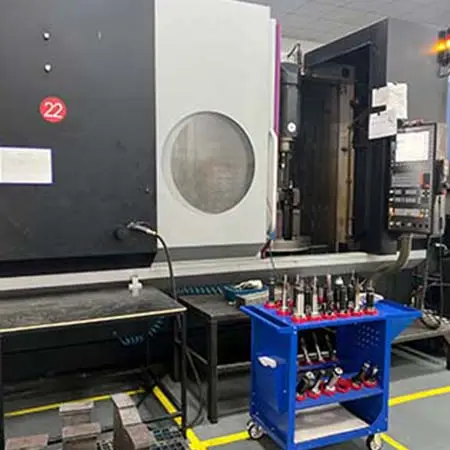
In high-performance industrial manufacturing, material selection is never an afterthought. The choice of material directly determines the dimensional accuracy, surface quality, mechanical performance, and longevity of a finished component. This is especially true in custom CNC machining, where each part is engineered to exact specifications and must meet demanding application requirements across aerospace, automotive, medical, defense, and precision engineering sectors. Understanding which advanced materials are commonly used — and why — is essential knowledge for engineers, procurement teams, and product developers who rely on machined components.
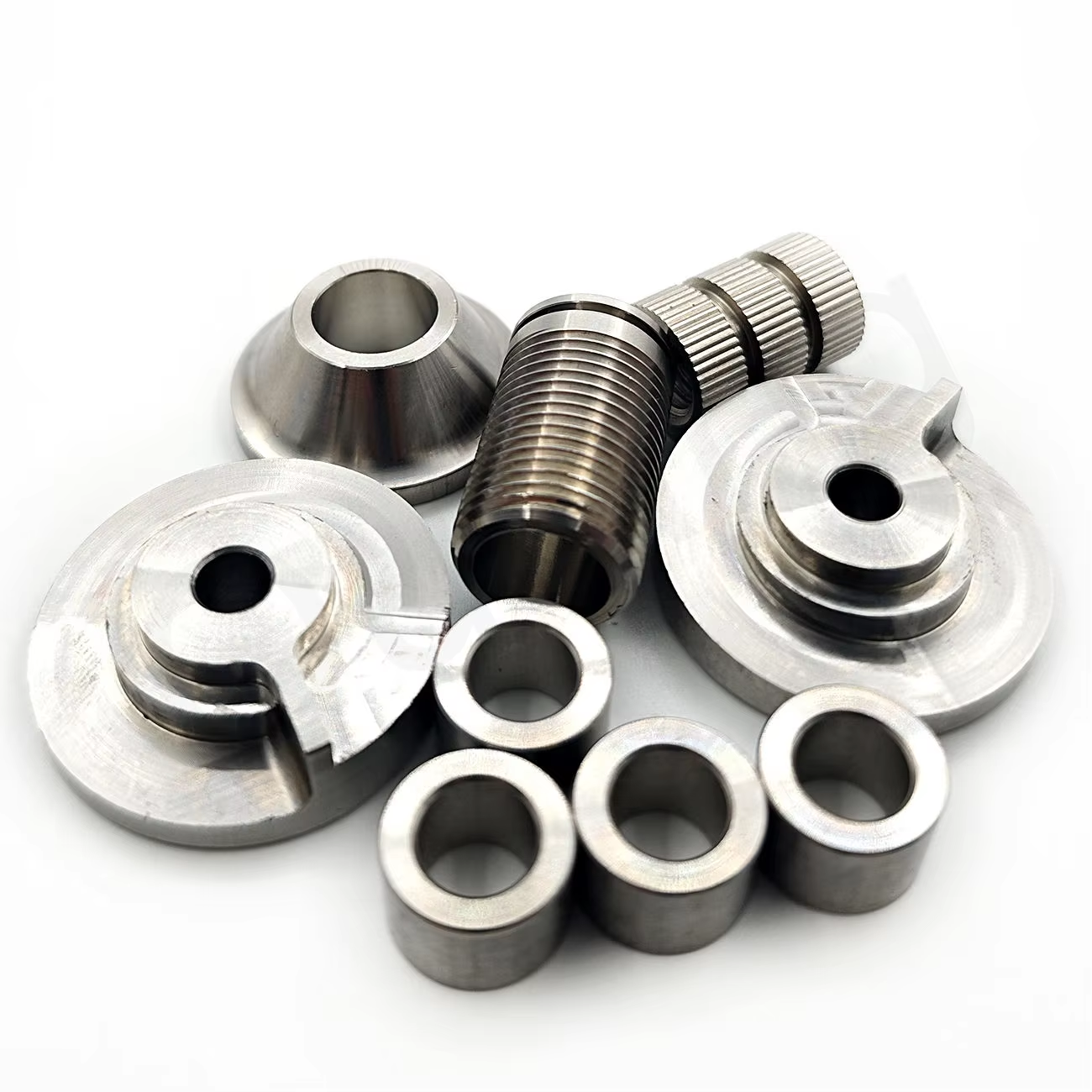
Advanced materials in custom CNC machining go far beyond basic steel and plastic. Today’s machine shops work with a wide spectrum of metals, engineering plastics, and specialty alloys, each offering distinct machinability profiles, structural characteristics, and performance envelopes. Selecting the right material for a given application — and then machining it precisely — is what separates a capable CNC machining partner from a commodity vendor. This article explores the most important advanced materials used in industrial custom CNC machining, their properties, applications, and the practical considerations that guide material selection decisions.
Aluminum Alloys in Custom CNC Machining
Why Aluminum Remains a Top Choice
Aluminum is one of the most widely machined metals in industrial manufacturing, and for good reason. It offers an excellent strength-to-weight ratio, natural corrosion resistance, and outstanding machinability. In custom CNC machining, aluminum alloys can be cut at high speeds with tight tolerances, making them ideal for high-volume production runs and complex geometries alike. The material produces clean chips, reduces tool wear, and allows for a wide range of surface finishing options including anodizing, alodine coating, and powder coating.
Different aluminum alloy grades serve different industrial purposes. The 6061 alloy is arguably the most popular in general industrial applications due to its balanced combination of strength, formability, and corrosion resistance. The 7075 alloy, on the other hand, is preferred in aerospace and defense applications where higher tensile strength is required. The 2024 grade is also common in aerospace structures, offering good fatigue resistance. Each of these materials behaves differently under the cutting tool, requiring experienced machinists to adjust feeds, speeds, and toolpath strategies accordingly.
From a commercial perspective, aluminum’s lower raw material cost and fast machining cycle times make it a cost-efficient choice for prototyping and production components. This is why many OEMs and product developers default to aluminum when engaging a custom CNC machining partner for initial design iterations. The ability to achieve tolerances as tight as ±0.01 mm on aluminum parts gives engineers the confidence to validate designs quickly without compromising on part quality.
Surface Treatment Compatibility
One of the underappreciated advantages of aluminum in custom CNC machining is its broad compatibility with surface treatment processes. Anodizing is particularly popular because it not only improves corrosion resistance but also allows parts to be dyed in specific colors for identification or aesthetics. Hard anodizing, a thicker version of the process, provides wear resistance that approaches that of mild steel, making it suitable for moving parts or surfaces subject to friction.
Chemical film coating, also known as chromate conversion coating, is another widely used post-process for aluminum CNC machined parts. It provides a conductive layer that is essential for electrical components and housings. Bead blasting and brushing are used to produce uniform matte or satin finishes that reduce light reflection and improve grip. When clients engage in custom CNC machining projects, specifying the appropriate post-treatment for aluminum is just as important as defining dimensional tolerances.
Stainless Steel Grades and Their Machining Demands
Understanding Stainless Steel Families
Stainless steel is a critical material in custom CNC machining for applications that demand corrosion resistance, structural integrity, and long service life. However, not all stainless steel grades are created equal. The austenitic grades, particularly 304 and 316, are the most commonly encountered in industrial machining. Grade 304 is used across food processing, chemical handling, and general-purpose structural components, while grade 316 — with its addition of molybdenum — offers superior chloride corrosion resistance, making it the default choice for marine and medical environments.
Machining stainless steel presents distinct challenges compared to aluminum. Stainless steel is harder, has a tendency to work-harden during cutting, and generates more heat at the tool-workpiece interface. These characteristics require carbide tooling, appropriate cutting speeds, and consistent coolant delivery to prevent built-up edge formation and dimensional distortion. Experienced operators engaged in custom CNC machining of stainless steel understand that rigidity in the machine setup and optimized cutting parameters are non-negotiable for achieving consistent part quality.
Martensitic grades like 420 and 440C offer higher hardness and are typically used for valve components, pump shafts, and cutting tools. These materials are more challenging to machine but provide excellent wear resistance in high-stress environments. Precipitation-hardening grades such as 17-4 PH are particularly popular in aerospace, oil and gas, and defense applications where high strength combined with corrosion resistance is critical. These advanced stainless variants demand careful heat treatment sequencing alongside custom CNC machining to achieve the desired mechanical properties.
Tolerances and Finish Standards for Stainless Parts
Achieving tight tolerances on stainless steel components requires careful attention to thermal expansion, tool deflection, and workholding rigidity. In precision custom CNC machining, stainless parts are often roughed and then finished in separate operations to allow residual stresses to normalize before the final pass. This approach ensures dimensional accuracy is maintained to the specified tolerances, which in critical applications may be as tight as ±0.005 mm.
Surface finish on stainless steel components is equally important, particularly in medical and food-grade applications where Ra values below 0.8 μm are typically required to prevent bacterial accumulation. Electropolishing is commonly used as a post-machining treatment to smooth microscopic surface irregularities, improve cleanliness, and further enhance corrosion resistance. Passivation treatment is another standard requirement that removes free iron from the surface and strengthens the protective oxide layer inherent to stainless steel.
Brass and Copper Alloys in Precision Machining
Machinability and Application Fit
Brass is one of the most machinable metals available and holds a prominent position in custom CNC machining for precision components. Its excellent chip-breaking characteristics, low cutting forces, and dimensional stability make it a preferred material for complex turned parts, threaded inserts, valve bodies, electrical connectors, and fluid system fittings. Brass alloys such as C360 (free-machining brass) are specifically formulated to maximize machinability, enabling high-speed production with minimal tool wear.
Copper and copper alloys such as beryllium copper, phosphor bronze, and oxygen-free copper are also machined regularly in precision industrial applications. Beryllium copper, for instance, offers spring-like mechanical properties combined with electrical conductivity and is widely used in contact springs, electrical switches, and molds for injection molding. Phosphor bronze is used in bushings and bearings where low friction and moderate load resistance are required. Each of these materials behaves differently in custom CNC machining environments, requiring specific tooling geometries and surface speed adjustments.
Electrical and Thermal Conductivity Advantages
The electrical and thermal conductivity of brass and copper alloys makes them irreplaceable in specific engineering applications. Heat sinks, bus bars, RF shielding components, and precision waveguides are typically manufactured through custom CNC machining from oxygen-free copper or high-conductivity copper alloys. These parts require not only dimensional accuracy but also surface purity, because oxidation or contamination can significantly degrade electrical and thermal performance.
From a design standpoint, engineers working with copper alloys in custom CNC machining must account for the material’s tendency to smear under cutting forces if tooling is not kept sharp. Bright cutting operations using polished tool faces and appropriate rake angles are standard practice. Certain applications also require electroless nickel plating or gold plating over brass machined parts to prevent tarnishing and maintain surface conductivity over time, particularly in high-reliability electronic assemblies.
Engineering Plastics and Specialty Polymer Machining
High-Performance Plastics for Industrial Use
Engineering plastics have become increasingly important in custom CNC machining, particularly in applications where metal substitution can reduce weight, eliminate corrosion concerns, or provide electrical insulation. Materials such as PEEK (polyether ether ketone), Delrin (acetal), UHMW polyethylene, nylon, and PTFE are routinely machined to precise dimensions for components used in medical devices, semiconductor equipment, food processing machinery, and aerospace interiors.
PEEK deserves particular attention because it offers mechanical properties approaching those of some metals, combined with outstanding chemical resistance and the ability to operate continuously at temperatures up to 250°C. In custom CNC machining, PEEK is used to produce surgical instruments, pump components, bearings, and structural brackets where light weight and biocompatibility are required. Despite being a polymer, PEEK is relatively rigid and machines well with the correct tooling and coolant strategy, though it is considerably more expensive than standard engineering plastics.
Delrin (acetal homopolymer) is another widely machined plastic valued for its stiffness, low friction coefficient, and moisture resistance. It is frequently used for gears, bushings, cam followers, and precision mechanical parts in custom CNC machining projects. Its predictable dimensional stability during machining makes it a reliable choice when tight tolerances are required on plastic components. PTFE, while softer and more difficult to hold dimensionally, is selected for its chemical inertness and low friction in sealing and fluid handling applications.
Challenges Specific to Plastic CNC Machining
Machining engineering plastics in custom CNC machining workflows presents a distinct set of challenges compared to metals. Plastics are viscoelastic — meaning they deform slightly under cutting forces and can spring back after machining, affecting dimensional accuracy. Temperature management during cutting is critical because excessive heat can cause thermal distortion, melting, or surface smearing. For this reason, air cooling or light misting is preferred over flood coolant with certain polymers that are sensitive to moisture absorption.
Workholding is another concern when machining thin-walled plastic components, as excessive clamping force can distort the part. Custom fixtures and soft jaws are often required in custom CNC machining of precision plastic parts. Additionally, stress relieving the raw plastic stock before machining is standard practice for high-tolerance applications, as internal stresses from the extrusion or molding process can cause warping after material is removed. These nuances illustrate why material knowledge is inseparable from machining expertise in precision manufacturing.
Titanium and Exotic Alloys in Advanced Industrial Machining
The Difficulty and Value of Titanium
Titanium is widely regarded as one of the most challenging yet most valuable materials processed in custom CNC machining. Its exceptional strength-to-weight ratio, outstanding biocompatibility, and corrosion resistance make it indispensable in aerospace structures, medical implants, and high-performance sporting equipment. Grade 5 titanium (Ti-6Al-4V) is the most commonly machined variant, accounting for a large percentage of all titanium components manufactured globally.
The machining challenges associated with titanium stem from its low thermal conductivity, chemical reactivity with cutting tools at elevated temperatures, and tendency to work-harden. Heat generated during cutting concentrates at the tool edge rather than being carried away in chips, accelerating tool wear significantly. Successful custom CNC machining of titanium requires sharp carbide or polycrystalline diamond tooling, conservative cutting speeds, high feed rates, and generous application of cutting fluid to manage heat and reduce tool-material adhesion.
Despite these challenges, titanium is increasingly accessible to precision machine shops equipped with modern 5-axis CNC machining centers and high-pressure coolant delivery systems. The ability to produce complex titanium components with tight tolerances and excellent surface integrity is a significant competitive advantage for machine shops serving aerospace, medical, and defense clients. Proper toolpath strategies that minimize radial engagement and distribute cutting forces evenly across the tool are essential in custom CNC machining of titanium components.
Other Exotic and Superalloy Materials
Beyond titanium, a range of nickel-based superalloys such as Inconel 625, Inconel 718, and Hastelloy are encountered in advanced custom CNC machining operations. These materials are designed to maintain mechanical properties at extreme temperatures and in highly corrosive environments, making them the materials of choice for gas turbine components, exhaust systems, chemical processing equipment, and downhole oil and gas tooling.
Inconel is particularly notorious for its machining difficulty. It work-hardens rapidly, generates intense cutting heat, and causes rapid tool wear even with premium cutting tools. Successful custom CNC machining of Inconel requires specialized tooling strategies including ceramic or CBN inserts for some operations, very low cutting speeds, rigid machine setups, and meticulous quality control throughout the process. Despite the complexity and cost involved, the demand for precision machined Inconel and superalloy components continues to grow as industrial equipment operates at increasingly extreme conditions.
Tungsten and molybdenum alloys represent another category of advanced materials that are occasionally processed through custom CNC machining. These materials have extremely high melting points, exceptional density, and are used in radiation shielding, balance weights, electrical contacts, and thermal management applications. Machining these materials requires diamond-coated tooling, rigid setups, and very careful parameter management due to their brittleness and abrasive nature.
FAQ
What materials are most commonly used in industrial custom CNC machining?
The most commonly used materials in industrial custom CNC machining include aluminum alloys (6061, 7075), stainless steel grades (304, 316, 17-4 PH), brass alloys like C360, engineering plastics such as PEEK and Delrin, and titanium alloys such as Ti-6Al-4V. The specific material selected depends on the mechanical, thermal, chemical, and weight requirements of the application.
Why is titanium considered difficult to machine in custom CNC machining?
Titanium is difficult to machine because it has low thermal conductivity, which means heat generated during cutting stays concentrated at the tool tip rather than dissipating through the chip. This accelerates tool wear rapidly. Titanium also tends to work-harden and reacts chemically with carbide tooling at high temperatures. Successful custom CNC machining of titanium requires specialized tooling, high-pressure coolant, conservative speeds, and experienced process planning.
Can engineering plastics be machined to the same tolerances as metals in custom CNC machining?
Engineering plastics can be machined to tight tolerances in custom CNC machining, but they require different handling compared to metals. Plastics are viscoelastic and sensitive to heat and clamping forces, which can cause dimensional deviations. With proper fixture design, stress-relieved stock, and appropriate tooling, tolerances as tight as ±0.05 mm or better can be achieved on materials like PEEK and Delrin. However, materials like PTFE remain more challenging due to their softness and thermal expansion characteristics.
How does material selection affect the cost of custom CNC machining?
Material selection significantly affects custom CNC machining costs in multiple ways. The raw material price varies widely — aluminum is economical, while titanium and nickel superalloys are expensive. Harder and more difficult-to-machine materials increase cutting time, accelerate tool wear, and require more frequent tool changes, all of which add to cost. Surface treatment requirements and inspection complexity also factor in. Engaging with a knowledgeable machining partner early in the design phase helps optimize material selection for both performance and cost efficiency.