
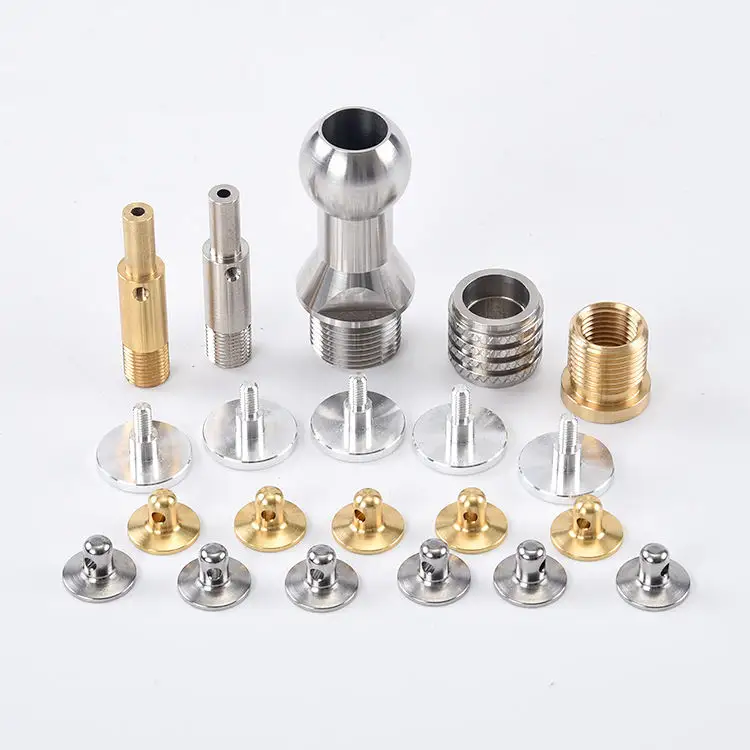
When procurement teams and engineering managers begin sourcing bulk parts for CNC machining projects, the conversation almost always starts with price. But experienced buyers know that cost is only one dimension of a far more complex decision. The most consequential variable—one that determines whether a supply chain runs smoothly or grinds to a halt—is factory reliability. Choosing an unreliable manufacturer when ordering bulk parts for CNC applications can trigger cascading problems: delayed production schedules, inconsistent tolerances, costly rework, and eroded client trust. The stakes are simply too high to treat supplier evaluation as an afterthought.
This article is designed to help buyers, procurement engineers, and supply chain professionals build a structured, evidence-based approach to evaluating factory reliability before committing to large-volume orders. Whether you are sourcing milled aluminum components, stainless steel assemblies, or precision copper fittings, understanding what reliable factory performance looks like—and how to verify it—is the foundation of a sustainable supplier relationship. The guidance here applies across industries where bulk parts for CNC machining represent a critical input to final product quality.
Why Factory Reliability Matters More at Scale
Volume Amplifies Every Flaw
Ordering a sample batch of ten or twenty pieces from a supplier carries manageable risk. If a few parts fall outside tolerance, the financial and operational impact is limited. But when you scale to hundreds or thousands of bulk parts for CNC, even a defect rate of one percent can translate into dozens of non-conforming components per shipment. At that scale, inspection costs rise, production downtime becomes a real threat, and the administrative burden of managing returns and replacements can absorb significant internal resources.
Reliable factories understand this arithmetic and engineer their processes accordingly. They implement statistical process control, maintain calibrated tooling, and schedule preventive maintenance to keep their CNC machines running within specification across long production runs. When evaluating a supplier for large-volume work, you should specifically ask how their quality systems are designed to maintain consistency as order quantities grow. A factory that performs well on prototypes but struggles with repeatability at scale is not a reliable partner for bulk parts for CNC procurement.
Supply Continuity Depends on Operational Stability
Factory reliability is not only about part quality—it also encompasses the supplier’s ability to deliver on schedule, respond to engineering change orders, and absorb fluctuations in demand without disrupting your production timeline. A manufacturer that experiences frequent machine breakdowns, high workforce turnover, or unstable raw material sourcing will struggle to provide the consistent lead times that bulk procurement requires.
When assessing a potential supplier for bulk parts for CNC, evaluate their operational depth. Do they have redundant machining capacity? Can they run additional shifts if your order volume increases unexpectedly? Do they maintain buffer stock of commonly used raw materials? These questions reveal whether the factory has built resilience into its operations or whether it functions with the kind of thin margins that make disruption likely under pressure.
Key Indicators of a Reliable CNC Parts Manufacturer
Certifications and Quality Management Systems
Formal quality certifications are among the most accessible and objective indicators of factory reliability. ISO 9001 certification, for instance, demonstrates that a manufacturer has implemented a documented quality management system that covers everything from raw material inspection to final product verification. For buyers sourcing bulk parts for CNC machining, this certification signals that the supplier takes process consistency seriously and submits to third-party audits to validate that claim.
Beyond ISO 9001, look for industry-specific quality standards relevant to your application. Aerospace and medical device suppliers may hold AS9100 or ISO 13485 certifications. Automotive-focused factories often comply with IATF 16949. These specialized standards impose more rigorous requirements around traceability, process validation, and corrective action management. Even if your application does not fall within these regulated industries, a supplier certified to these standards is demonstrating a higher baseline of operational discipline.
Equipment Investment and Maintenance Culture
The machines a factory operates directly determine its capacity to produce precise, repeatable bulk parts for CNC applications. During supplier evaluation, request detailed information about the CNC equipment in use: the makes and models of machining centers, their age, and the tolerance capabilities they support. A factory relying on aging, poorly maintained equipment introduces variability that certification alone cannot compensate for.
Equally important is how the factory manages equipment upkeep. Ask about their preventive maintenance schedule and how they handle unplanned downtime. Reliable manufacturers invest in calibration programs, replace worn tooling on a scheduled basis, and track machine performance metrics over time. This culture of equipment stewardship is a strong predictor of consistent output quality when producing bulk parts for CNC at high volumes.
Engineering and Technical Support Capabilities
A factory’s ability to engage meaningfully with your engineering team is an underappreciated reliability signal. Suppliers who can review your CAD files and drawings, flag potential manufacturability issues before production begins, and suggest material or tolerance optimizations are demonstrating a depth of technical competence that purely price-focused suppliers rarely possess. This kind of upstream collaboration prevents costly mistakes and ensures that the bulk parts for CNC you receive match your design intent precisely.
Technical responsiveness also matters during production. If a dimensional anomaly appears mid-run, a reliable factory will identify the issue quickly, communicate transparently, and implement a corrective action before the problem propagates across the entire batch. Factories that lack in-house engineering capability tend to push problems back to the buyer rather than resolving them proactively, which is a significant reliability risk in high-volume environments.
Verification Methods Before Committing to Bulk Orders
Factory Audits and On-Site Assessments
Documentation and certifications provide a useful starting point, but direct observation provides information that paperwork cannot. Conducting a factory audit—either through your own team or through a qualified third-party inspection firm—before placing a large order of bulk parts for CNC is one of the most effective reliability verification tools available. An audit allows you to assess the factory floor layout, observe how operators handle in-process inspection, evaluate housekeeping standards, and speak directly with the quality management team.
During an audit, pay particular attention to how the factory controls non-conforming materials. Is there a clearly marked rejection zone? Are defective parts physically separated from accepted inventory? A factory with strong material segregation practices is far less likely to inadvertently ship rejected bulk parts for CNC components within an otherwise acceptable delivery. These operational details are only visible through direct assessment.
First Article Inspection and Sample Validation
Before releasing a full production run, require your supplier to produce a controlled first article sample and submit it for dimensional and material verification against your engineering drawings. First article inspection (FAI) is a standard practice in precision manufacturing and should be a non-negotiable checkpoint when sourcing bulk parts for CNC at scale. A supplier who resists FAI requirements is effectively asking you to accept production risk without evidence of conformance.
Review the FAI results carefully, including material certifications, dimensional measurement reports, and surface finish validation. If any dimensions fall near the edge of your tolerance band, discuss process adjustments with the factory before approving full-volume production. This front-end investment in validation dramatically reduces the likelihood of receiving non-conforming bulk parts for CNC components in your actual delivery.
Reference Checks and Production History Review
Requesting references from existing customers—particularly those who have been placing large orders with the factory for multiple years—provides real-world reliability evidence that no marketing material can replicate. Ask those references specifically about delivery performance, how the factory handles quality issues when they arise, and whether the supplier has demonstrated the ability to scale production in response to demand changes.
Reviewing the factory’s production history for parts similar to yours is equally valuable. A manufacturer with extensive experience producing bulk parts for CNC in your material category—whether aluminum, stainless steel, or copper—will have refined their toolpath strategies, cutting parameters, and fixturing methods for that material class. This accumulated knowledge translates directly into more predictable output quality and lower defect rates compared to a factory attempting an unfamiliar material for the first time.
Building a Long-Term Reliability Framework with Your Supplier
Establishing Clear Performance Metrics
Reliability is not a static condition—it requires active management from both the buyer and the supplier. Once you have selected a factory for your bulk parts for CNC requirements, establish explicit performance metrics that both parties track over time. Key metrics typically include on-time delivery rate, incoming inspection pass rate, dimensional nonconformance rate per batch, and response time to corrective action requests.
Review these metrics on a regular cadence—monthly or quarterly depending on order frequency—and use the data to drive collaborative improvement conversations. Suppliers who see their performance data and engage constructively with it are demonstrating the kind of partnership orientation that sustains long-term reliability. Those who become defensive or dismissive when performance gaps are identified are signaling cultural attitudes that tend to produce recurring quality problems.
Supplier Development and Continuous Improvement Programs
The most effective buyer-supplier relationships around bulk parts for CNC are built on a shared commitment to continuous improvement rather than a purely transactional dynamic. Investing time in supplier development—sharing your quality expectations in detail, providing feedback after each delivery, and occasionally offering technical guidance on common manufacturing challenges—elevates the supplier’s capability over time and reduces the need for costly inspection and rework on your end.
Some buyers establish supplier scorecards that formally track and communicate performance trends. Others schedule annual supplier reviews to align on engineering roadmaps and identify process improvements that benefit both parties. These structured engagement practices keep the relationship focused on quality and reliability rather than defaulting to price negotiation as the primary interaction. For organizations that depend on a steady, high-quality stream of bulk parts for CNC machined components, this investment in supplier development pays dividends in supply chain stability.
FAQ
What should I look for in a supplier’s quality documentation when ordering bulk parts for CNC?
Focus on material certifications for each batch, dimensional inspection reports, and documented calibration records for the measuring equipment used. A reliable supplier should be able to provide full traceability from raw material to finished part. For bulk parts for CNC machining, also confirm that the supplier issues a certificate of conformance with each shipment, clearly linking the delivered components to the specific purchase order and inspection records.
How can I assess whether a factory will maintain quality consistency across a large order of bulk parts for CNC?
Request evidence of statistical process control implementation, including control charts or process capability data (Cpk values) for critical dimensions. Ask how the factory monitors dimensional drift during extended production runs. A factory that tracks in-process measurements and adjusts its tooling or parameters proactively is far more likely to deliver consistent bulk parts for CNC across an entire batch than one relying solely on end-of-line inspection.
Is a factory audit necessary before placing a first bulk order for CNC parts?
For significant order values or applications where precision is critical, a factory audit is strongly advisable before your first large-volume commitment. It allows you to verify that the factory’s actual capabilities match their stated qualifications. If a full on-site audit is not logistically feasible, engaging a third-party inspection firm to conduct the assessment on your behalf is a practical and widely accepted alternative for sourcing bulk parts for CNC components internationally.
What corrective action processes should a reliable factory have in place for bulk parts for CNC nonconformances?
A reliable supplier should have a documented corrective and preventive action (CAPA) process. When a nonconformance is identified—whether during incoming inspection on your end or during their own in-process checks—the factory should issue a formal corrective action report that identifies root cause, describes the immediate containment action taken, and outlines the long-term process change implemented to prevent recurrence. Factories that respond to nonconformances with this level of structured accountability are the ones capable of sustaining reliable output of bulk parts for CNC across extended production partnerships.