
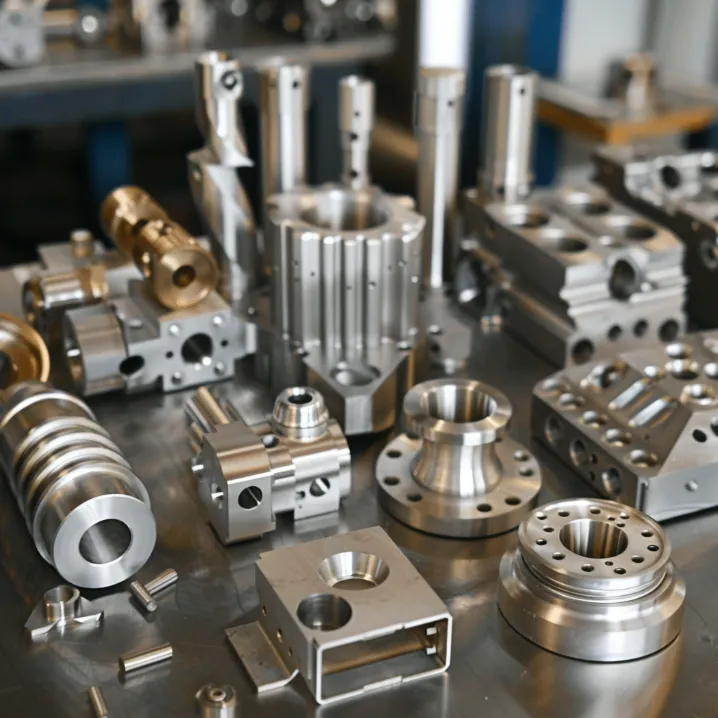
The aerospace industry demands precision manufacturing solutions that can deliver components meeting stringent tolerances, material specifications, and performance requirements. Custom CNC machining has emerged as the cornerstone technology for producing complex aerospace components that traditional manufacturing methods cannot achieve. These specialized machining solutions enable aerospace manufacturers to create intricate geometries, maintain dimensional accuracy within microns, and work with advanced materials that define modern aircraft and spacecraft systems.
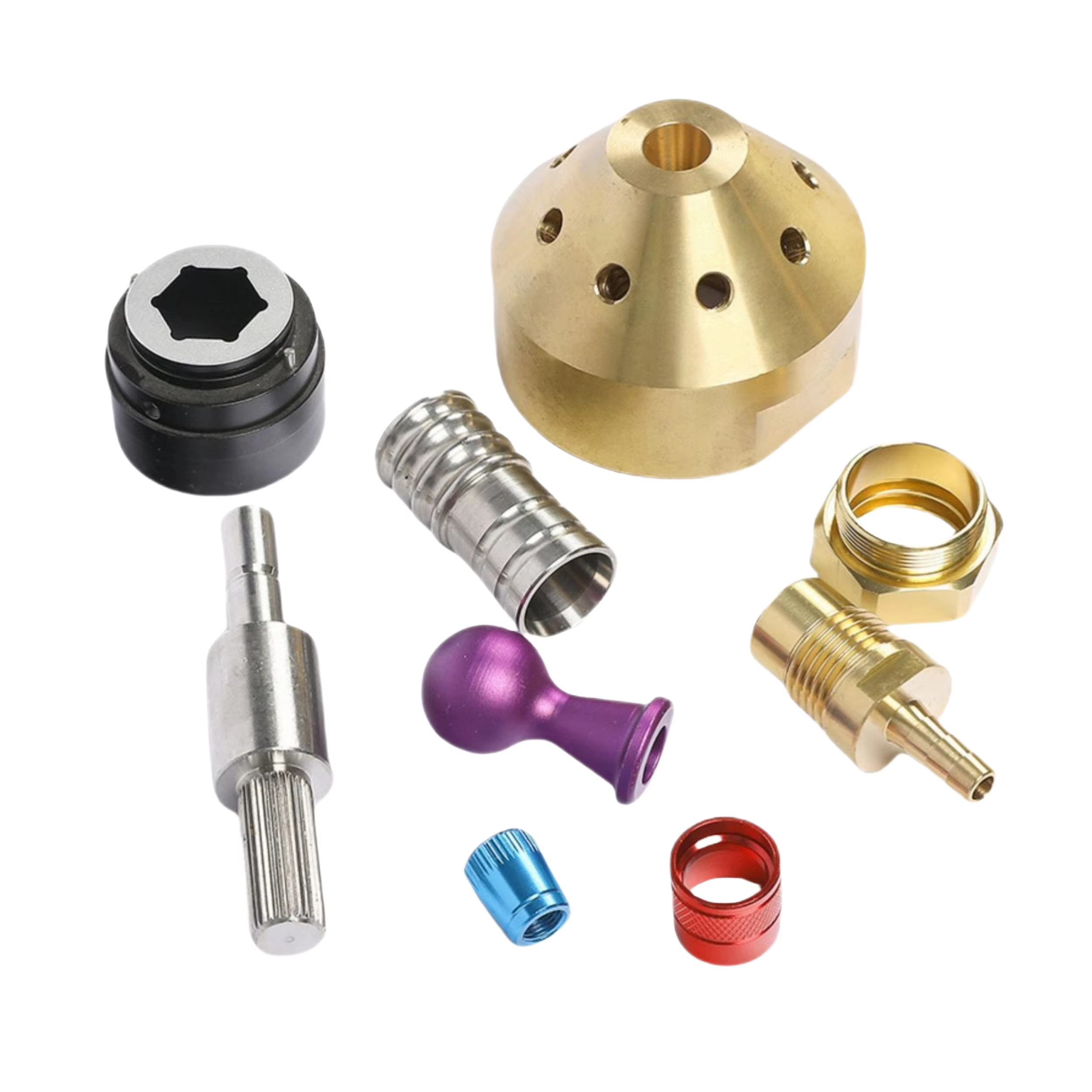
Modern aerospace component manufacturing faces unique challenges that require sophisticated custom CNC machining approaches. From turbine blades with complex internal cooling channels to lightweight structural components with intricate lattice designs, aerospace applications push the boundaries of what conventional machining can accomplish. Understanding how custom CNC machining solutions address these specific aerospace requirements provides insight into why this technology has become indispensable for aerospace manufacturers seeking competitive advantages in performance, weight reduction, and operational efficiency.
Advanced Material Processing Capabilities
Titanium Alloy Machining Excellence
Custom CNC machining solutions excel in processing titanium alloys commonly used in aerospace applications due to their exceptional strength-to-weight ratios and corrosion resistance. These specialized machining processes accommodate titanium’s challenging characteristics, including its tendency to work-harden and generate excessive heat during cutting operations. Advanced tooling strategies and cutting parameters ensure optimal material removal rates while maintaining surface integrity critical for aerospace component performance.
The machining of titanium aerospace components requires precise temperature control and specialized cutting fluids to prevent thermal damage that could compromise material properties. Custom CNC machining systems incorporate real-time monitoring technologies that adjust cutting speeds, feeds, and coolant delivery based on thermal feedback. This level of control ensures that critical aerospace components maintain their designed material characteristics throughout the manufacturing process, preserving the structural integrity essential for flight safety applications.
Superalloy Processing Techniques
Nickel-based superalloys present significant machining challenges due to their high-temperature strength and chemical resistance properties that make them ideal for jet engine components. Custom CNC machining solutions address these challenges through specialized cutting strategies that minimize tool wear while achieving the precise tolerances required for turbine blades, combustor components, and other critical engine parts. These processes incorporate advanced tool materials and coatings specifically designed to withstand the extreme conditions encountered when machining superalloys.
The successful machining of superalloy aerospace components depends on maintaining optimal chip evacuation and preventing built-up edge formation that can compromise surface finish quality. Custom CNC machining systems utilize high-pressure coolant delivery and specialized chip-breaking geometries to manage the challenging chip formation characteristics of these materials. This attention to detail in process design ensures that finished aerospace components meet the demanding surface quality standards required for high-performance applications.
Precision Geometric Complexity Management
Multi-Axis Machining Strategies
Complex aerospace components often feature intricate three-dimensional geometries that cannot be adequately produced using conventional three-axis machining approaches. Custom CNC machining solutions incorporate advanced five-axis capabilities that enable simultaneous cutting along multiple axes, allowing for the production of components with undercuts, complex curves, and internal features that would otherwise require multiple setups and specialized fixtures.
The implementation of multi-axis custom CNC machining strategies reduces setup times and eliminates potential alignment errors that can occur when transferring workpieces between different machining operations. This integrated approach ensures dimensional consistency across all features of complex aerospace components while minimizing handling-induced stress concentrations. The ability to machine complete features in single setups also reduces manufacturing lead times, enabling aerospace manufacturers to respond more quickly to program demands and design changes.
Internal Feature Machining Capabilities
Many aerospace components require internal cooling passages, lightening pockets, and structural reinforcement features that present unique machining challenges. Custom CNC machining solutions address these requirements through specialized tooling and programming strategies that enable access to internal geometries while maintaining structural integrity of surrounding material. These techniques include deep-hole drilling, internal contouring, and pocket machining operations that achieve specified dimensions without compromising component strength.
The machining of internal features in aerospace components requires careful consideration of tool deflection, vibration control, and chip evacuation to prevent dimensional variations that could affect component performance. Custom CNC machining systems incorporate adaptive machining technologies that monitor cutting forces and adjust process parameters in real-time to maintain optimal cutting conditions throughout complex internal feature machining operations. This level of process control ensures that finished components meet design specifications for both external and internal geometries.
Quality Assurance Integration
In-Process Measurement Systems
Aerospace component manufacturing demands continuous quality monitoring throughout the machining process to ensure dimensional accuracy and prevent costly rework or component rejection. Custom CNC machining solutions integrate sophisticated measurement systems that provide real-time feedback on dimensional variations, enabling immediate process adjustments to maintain tolerances within specified limits. These systems utilize laser scanning, touch probing, and coordinate measurement technologies that operate within the machining environment without requiring workpiece removal.
The integration of measurement systems within custom CNC machining operations enables statistical process control approaches that identify trends in dimensional variation before they result in out-of-specification components. This predictive quality management approach reduces scrap rates and improves overall manufacturing efficiency while maintaining the rigorous quality standards required for aerospace applications. Real-time measurement data also provides valuable feedback for optimizing cutting parameters and tool selection for specific component geometries and material combinations.
Surface Integrity Monitoring
Surface quality characteristics such as roughness, residual stress, and microstructure integrity significantly impact the fatigue life and performance of aerospace components. Custom CNC machining solutions incorporate advanced monitoring technologies that assess surface integrity parameters during the machining process, enabling immediate identification of conditions that could compromise component durability. These monitoring systems utilize acoustic emission sensors, force measurement, and thermal imaging to detect surface integrity variations in real-time.
The continuous monitoring of surface integrity during custom CNC machining operations enables process optimization that balances productivity with quality requirements. By understanding the relationship between cutting parameters and resulting surface characteristics, aerospace manufacturers can develop machining strategies that maximize material removal rates while maintaining surface quality standards. This optimization approach reduces manufacturing costs while ensuring that finished components meet the demanding performance requirements of aerospace applications.
Process Optimization and Efficiency
Adaptive Machining Technologies
Modern aerospace component manufacturing requires machining systems that can automatically adapt to variations in material properties, workpiece geometry, and cutting tool condition to maintain optimal performance throughout production runs. Custom CNC machining solutions incorporate artificial intelligence and machine learning algorithms that analyze cutting force patterns, vibration signatures, and surface quality measurements to continuously optimize process parameters. These adaptive systems improve machining efficiency while reducing the risk of component damage or quality defects.
The implementation of adaptive machining technologies in custom CNC machining operations enables unmanned production capabilities that are essential for meeting aerospace manufacturing volume requirements. These systems can automatically adjust cutting speeds, feed rates, and coolant delivery based on real-time process feedback, ensuring consistent component quality even during extended production runs. This level of automation reduces labor costs and improves manufacturing consistency while maintaining the precision required for aerospace applications.
Tool Life Management Strategies
Cutting tool performance significantly impacts the economics and quality of aerospace component manufacturing, particularly when machining difficult-to-cut materials commonly used in aerospace applications. Custom CNC machining solutions incorporate sophisticated tool life management systems that monitor cutting tool condition and predict optimal replacement timing to prevent tool failure that could damage expensive aerospace workpieces. These systems utilize cutting force analysis, acoustic monitoring, and vibration measurement to assess tool wear progression.
Effective tool life management in custom CNC machining operations requires understanding the relationship between cutting parameters, tool wear mechanisms, and resulting component quality characteristics. Advanced tool monitoring systems provide data that enables optimization of cutting speeds and feed rates to maximize tool life while maintaining surface quality requirements. This optimization approach reduces tooling costs and minimizes production interruptions associated with tool changes, improving overall manufacturing efficiency for complex aerospace components.
FAQ
What makes custom CNC machining essential for aerospace component manufacturing?
Custom CNC machining is essential for aerospace components because it provides the precision, material compatibility, and geometric complexity capabilities that aerospace applications demand. Unlike standard machining approaches, custom CNC machining solutions are specifically designed to handle the unique challenges of aerospace materials like titanium and superalloys while achieving the tight tolerances and complex geometries required for flight-critical components. This specialization ensures that aerospace manufacturers can produce components that meet stringent safety and performance requirements.
How do custom CNC machining solutions handle the challenging materials used in aerospace applications?
Custom CNC machining solutions address challenging aerospace materials through specialized cutting strategies, advanced tooling, and precise process control. These systems incorporate temperature management, optimized cutting parameters, and real-time monitoring to successfully machine materials like titanium alloys and nickel-based superalloys that are difficult to process with conventional methods. The combination of specialized equipment and expertise ensures that material properties are preserved while achieving the dimensional accuracy required for aerospace performance.
What quality standards can custom CNC machining achieve for aerospace components?
Custom CNC machining solutions routinely achieve tolerances within microns and surface finishes that meet or exceed aerospace industry standards such as AS9100 and NADCAP requirements. These systems incorporate in-process measurement, statistical process control, and surface integrity monitoring to ensure consistent quality throughout production. The combination of advanced machining capabilities and integrated quality systems enables aerospace manufacturers to produce components that meet the demanding specifications required for commercial and military aircraft applications.
How does custom CNC machining improve efficiency in aerospace component production?
Custom CNC machining improves aerospace manufacturing efficiency through multi-axis capabilities that reduce setup times, adaptive technologies that optimize cutting parameters automatically, and integrated quality systems that prevent rework. These solutions enable complete machining of complex components in fewer operations while maintaining tight tolerances and surface quality requirements. The reduction in handling, setup time, and quality-related delays significantly improves overall manufacturing throughput while reducing costs associated with aerospace component production.