
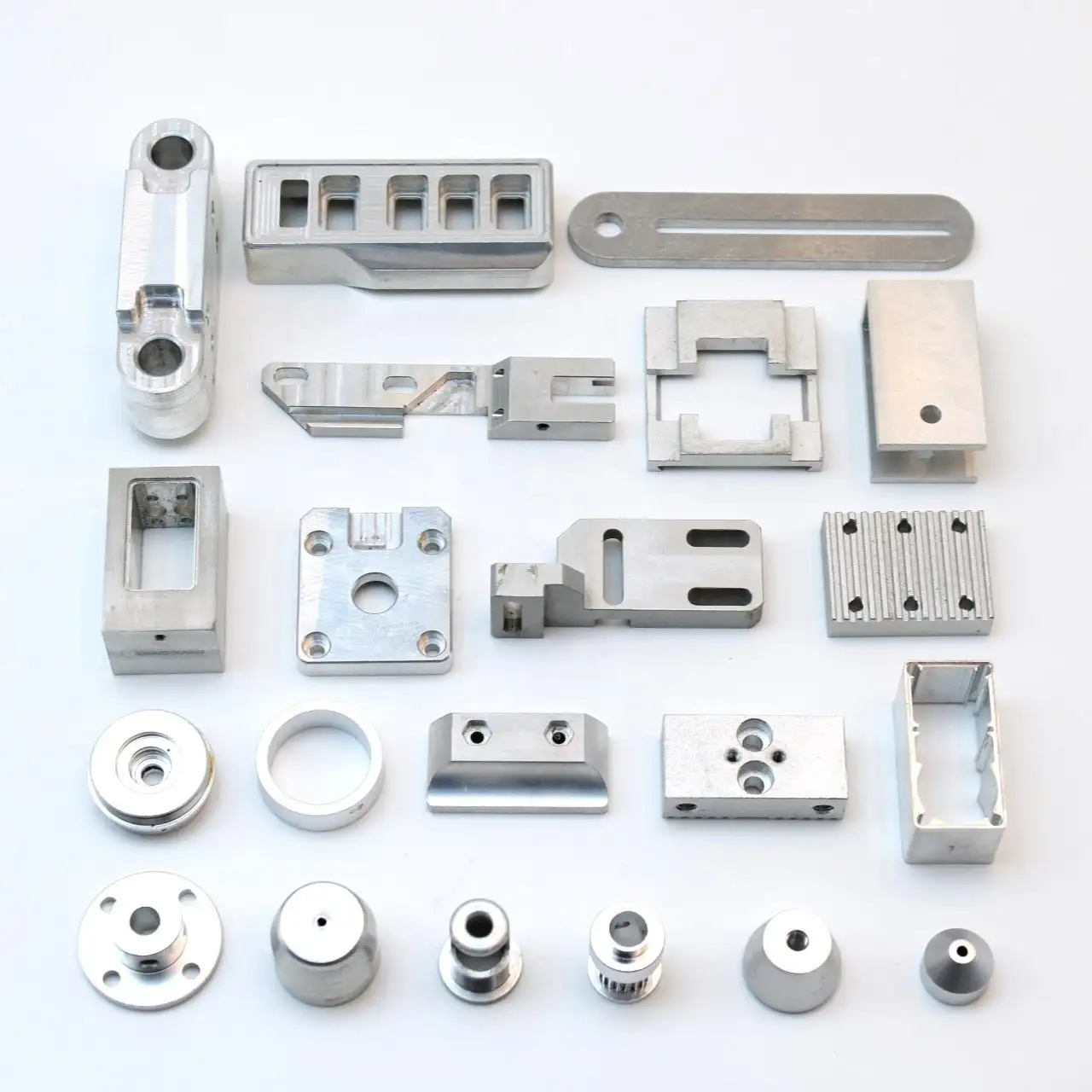
Reducing manufacturing costs while maintaining quality is a critical challenge in modern product development. Design optimization for lower-cost cnc machining requires strategic thinking about geometry, material selection, and manufacturing constraints from the earliest design phases. Engineers who understand these principles can achieve significant cost reductions without compromising functionality or durability.

Effective design optimization for lower-cost cnc machining involves understanding how geometric decisions directly impact machining time, tool wear, and setup complexity. By applying specific design principles and making informed material choices, manufacturers can achieve cost reductions of 30-50% while maintaining dimensional accuracy and surface finish requirements. This systematic approach transforms cost considerations from an afterthought into a fundamental design driver that enhances both manufacturability and profitability.
Understanding CNC Machining Cost Drivers
Material Utilization and Waste Reduction
Material costs represent a substantial portion of lower-cost cnc machining expenses, making efficient utilization critical for cost optimization. Designing components that maximize material usage while minimizing waste requires careful consideration of stock material dimensions and cutting strategies. Standard material sizes should guide initial design decisions, as custom material dimensions often carry premium pricing that negates potential savings from optimized geometry.
Nesting multiple parts within a single workpiece can dramatically reduce material waste and setup time for lower-cost cnc machining operations. This approach requires designing parts with compatible orientations and ensuring adequate material between components for structural integrity during machining. Engineers should also consider how material removal sequences affect remaining material stability, as excessive vibration or deflection can compromise dimensional accuracy and surface finish.
Strategic material selection balances cost, machinability, and performance requirements to achieve optimal lower-cost cnc machining results. Free-machining grades of common materials like aluminum 6061 or steel 1018 offer superior cutting characteristics that reduce cycle times and tool wear compared to harder alternatives. Understanding material properties such as chip formation, thermal conductivity, and work hardening tendencies enables designers to select grades that minimize machining complexity while meeting functional requirements.
Machining Time Optimization
Cycle time directly correlates with manufacturing cost in lower-cost cnc machining operations, making time optimization a primary design consideration. Complex geometries requiring multiple setups, tool changes, or specialized cutting strategies significantly increase production time and associated costs. Designers can minimize cycle time by consolidating features, reducing machining depth, and eliminating unnecessary precision requirements that demand slower cutting parameters.
Tool accessibility significantly impacts machining efficiency and cost-effectiveness in lower-cost cnc machining applications. Deep pockets, narrow slots, and enclosed features often require specialized tooling or multiple approaches that increase both cycle time and tooling costs. Designing features with adequate clearance for standard tooling and providing alternative access routes for cutting operations can substantially reduce machining complexity and associated expenses.
Surface finish requirements should align with functional needs rather than arbitrary specifications to achieve lower-cost cnc machining objectives. Specifying tighter tolerances and finer surface finishes than necessary forces slower cutting speeds, additional finishing passes, and potentially secondary operations that multiply production costs. Understanding the relationship between cutting parameters, tool geometry, and achievable surface quality enables designers to specify realistic requirements that balance performance with cost-effectiveness.
Geometric Design Principles for Cost Reduction
Feature Simplification Strategies
Geometric complexity directly influences machining cost, making feature simplification a fundamental principle for lower-cost cnc machining design optimization. Sharp internal corners require electrical discharge machining or specialized tooling, while radiused corners can be produced with standard end mills at significantly lower cost. Incorporating tool radius considerations into initial design decisions eliminates costly secondary operations and reduces overall production time.
Standardizing feature dimensions across multiple components enables tooling consolidation and setup efficiency in lower-cost cnc machining operations. Using consistent hole diameters, slot widths, and pocket depths allows manufacturers to optimize tool inventory and reduce changeover time between similar parts. This standardization approach also facilitates batch processing of multiple components, further reducing per-part production costs through economy of scale.
Eliminating unnecessary features and consolidating functional requirements into fewer geometric elements reduces machining complexity for lower-cost cnc machining applications. Multiple small features often require numerous tool changes and positioning moves that accumulate significant cycle time, while consolidated features can frequently be produced with single cutting operations. Designers should evaluate each feature’s functional necessity and explore opportunities for geometric consolidation without compromising performance.
Tolerance and Precision Optimization
Tolerance specification directly impacts machining cost, as tighter tolerances require slower cutting speeds, more precise tooling, and additional quality control measures in lower-cost cnc machining operations. Applying statistical tolerance analysis to determine actual functional requirements prevents over-specification of precision that increases production costs without corresponding performance benefits. Strategic tolerance allocation focuses precision requirements on critical dimensions while relaxing non-functional specifications.
Datum selection and geometric dimensioning principles significantly influence machining setup complexity and achievable accuracy in lower-cost cnc machining processes. Well-designed datum schemes minimize workpiece repositioning and enable efficient fixturing strategies that reduce setup time and improve repeatability. Designers should consider machining sequences when establishing datum references, ensuring that primary datums provide stable, accessible surfaces for initial workpiece positioning.
Surface finish specifications should reflect functional requirements rather than aesthetic preferences to maintain lower-cost cnc machining objectives. Different machining operations produce characteristic surface textures, and understanding these relationships enables designers to specify achievable finishes using standard cutting parameters. Avoiding unnecessarily smooth finishes eliminates secondary operations like polishing or grinding that significantly increase production costs without functional benefit.
Material Selection for Cost-Effective Machining
Machinability Considerations
Material machinability ratings provide quantitative guidance for selecting grades that optimize lower-cost cnc machining operations. Free-machining alloys incorporate additives like sulfur or lead that improve chip formation and reduce cutting forces, enabling higher cutting speeds and extended tool life. These materials typically cost slightly more per pound but deliver substantial savings through reduced cycle time and decreased tool consumption in production environments.
Thermal properties significantly influence cutting performance and tool wear in lower-cost cnc machining applications. Materials with high thermal conductivity like aluminum efficiently dissipate cutting heat, enabling aggressive cutting parameters and extended tool life. Conversely, materials with poor thermal conductivity require conservative cutting speeds and robust cooling strategies to prevent thermal damage to both workpiece and tooling, increasing overall production costs.
Work hardening characteristics affect machining strategy and cost optimization in lower-cost cnc machining processes. Materials that work harden rapidly under mechanical stress require consistent cutting engagement to prevent surface hardening that damages cutting tools. Understanding these material behaviors enables designers to select grades with favorable machining characteristics that minimize production complexity and associated costs.
Alternative Material Strategies
Standard commercial grades often provide adequate performance at significantly lower cost than premium alloys in lower-cost cnc machining applications. Aluminum 6061 and steel 1018 represent excellent general-purpose materials that offer good machinability, availability, and cost-effectiveness for many industrial applications. Evaluating actual performance requirements against material capabilities prevents over-specification that increases material costs without corresponding functional benefits.
Material substitution opportunities can achieve substantial cost savings while maintaining functional performance in lower-cost cnc machining projects. Engineering plastics like acetal or nylon often provide adequate strength and dimensional stability at fraction of metal costs for appropriate applications. Similarly, powder metallurgy components can replace machined parts for high-volume applications, offering near-net-shape production that minimizes material waste and machining requirements.
Supply chain considerations influence both material cost and availability for lower-cost cnc machining operations. Locally available materials eliminate shipping costs and lead time uncertainties that can impact production scheduling and inventory management. Building relationships with regional suppliers and understanding their standard inventory items enables designers to select materials that optimize both cost and supply reliability.
Production Planning and Setup Optimization
Batch Processing Strategies
Batch production strategies can dramatically reduce per-part costs in lower-cost cnc machining operations through setup amortization and material optimization. Designing families of similar components that share common tooling and setup requirements enables efficient production runs that distribute fixed costs across multiple parts. This approach requires coordinating design requirements across product lines to maximize manufacturing synergies.
Workpiece orientation and fixturing design significantly influence setup efficiency and cycle time in lower-cost cnc machining processes. Components designed with consistent datum surfaces and fixturing points can utilize standardized clamping systems that reduce setup time and improve repeatability. Multi-sided machining capabilities should be considered during design phases to minimize workpiece repositioning and associated handling costs.
Production sequencing optimization balances setup efficiency with quality requirements in lower-cost cnc machining operations. Roughing operations remove bulk material quickly but may require subsequent finishing passes to achieve dimensional accuracy and surface quality. Understanding these production sequences enables designers to optimize feature placement and access requirements that support efficient machining strategies.
Tooling and Equipment Considerations
Standard tooling availability directly impacts production cost and lead time for lower-cost cnc machining applications. Designing features that utilize readily available end mills, drills, and reamers eliminates custom tooling costs and reduces production setup time. Understanding standard tool geometries and capabilities enables designers to optimize feature dimensions and access requirements that support efficient machining operations.
Tool life optimization reduces consumable costs and minimizes production interruptions in lower-cost cnc machining processes. Consistent cutting conditions, appropriate speeds and feeds, and adequate cooling strategies extend tool life while maintaining surface quality and dimensional accuracy. Designing features that enable stable cutting conditions and minimize tool stress contributes to overall cost reduction through reduced tool consumption.
Equipment compatibility considerations ensure that designed components can be produced efficiently on available machine tools for lower-cost cnc machining operations. Understanding machine capabilities, work envelope limitations, and spindle power requirements prevents design decisions that exceed equipment capabilities or require specialized machinery that increases production costs. Designing within standard machine tool capabilities enables competitive pricing and broader supplier options.
FAQ
What design features increase CNC machining costs the most?
Deep narrow pockets, sharp internal corners, extremely tight tolerances, and complex three-dimensional surfaces significantly increase lower-cost cnc machining expenses. These features often require specialized tooling, multiple setups, slower cutting speeds, or secondary operations that multiply production time and costs. Designers can achieve substantial savings by incorporating tool radius requirements, relaxing non-functional tolerances, and simplifying geometric complexity while maintaining component functionality.
How does material selection impact CNC machining costs?
Material machinability directly influences cutting speeds, tool life, and cycle time in lower-cost cnc machining operations. Free-machining grades like aluminum 6061 or steel 1018 enable aggressive cutting parameters and extended tool life compared to harder alternatives, reducing both cycle time and tooling costs. Additionally, standard material sizes and local availability significantly impact raw material expenses and lead times, making material selection a critical cost optimization factor.
Can design optimization really achieve 30-50% cost reductions?
Yes, systematic design optimization for lower-cost cnc machining can achieve 30-50% cost reductions through combined improvements in material utilization, cycle time reduction, and setup efficiency. These savings result from eliminating unnecessary features, optimizing tolerances, selecting appropriate materials, and designing for standard tooling capabilities. However, actual savings depend on initial design complexity and the extent of optimization opportunities available in specific applications.
What tolerance levels provide the best cost-performance balance?
Standard machining tolerances of ±0.005 inches (±0.13mm) for general features and ±0.002 inches (±0.05mm) for critical dimensions typically provide optimal cost-performance balance in lower-cost cnc machining applications. Tighter tolerances requiring ±0.001 inches (±0.025mm) or better significantly increase production costs through slower cutting speeds and additional quality control requirements. Designers should apply statistical tolerance analysis to determine actual functional requirements and avoid over-specifying precision that increases costs without performance benefits.