
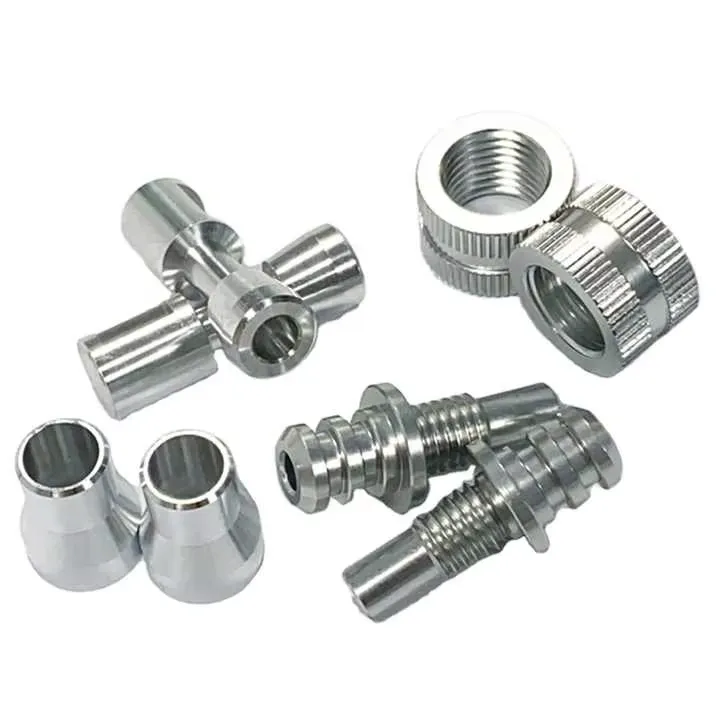
In modern manufacturing, precision mold machining has become a critical enabler for industries such as industrial equipment, automotive electronics, telecommunications, and medical devices. However, the industry faces persistent challenges: insuffic…
In modern manufacturing, precision mold machining has become a critical enabler for industries such as industrial equipment, automotive electronics, telecommunications, and medical devices. However, the industry faces persistent challenges: insufficient accuracy, difficulty in forming complex geometries, inconsistent surface treatment standards, long lead times for non-standard equipment, and poor adaptability to multiple materials. These issues directly affect product quality and production efficiency. Choosing a partner with deep technical expertise and end-to-end service capabilities has therefore become a key decision for manufacturers seeking to upgrade their operations.
Core Technical Dimensions of Precision Mold Machining
The value of a precision mold machining solution is reflected in several technical areas. First, accuracy. In aerospace, medical devices, and other fields with extremely tight tolerances, micron- or even sub-micron accuracy determines assembly reliability and functional stability. This level of precision requires high-end CNC equipment, rigorous process control, and a complete quality inspection system.
Second, complex geometry capability. Multi-axis machining enables one-clamping completion of intricate internal cavities, eliminating cumulative errors from multiple setups. This is especially critical for valve bodies, waveguide ports, and other parts with special internal flow paths or signal transmission requirements.
Third, material adaptability. From standard aluminum and carbon steel to stainless steel, engineering plastics, and ceramics, each material demands different tooling, cutting parameters, and cooling strategies. A solution provider with multi-material experience can effectively address issues such as work-hardening and thermal deformation.
Integrated End-to-End Solution Architecture
An effective precision mold machining solution should cover the entire chain: mold design and development, part machining, surface treatment, precision inspection, and on-demand assembly. This one-stop service model significantly reduces supply chain management costs and shortens product development cycles.
In the mold design phase, optimized structural design properly distributes stamping forces, minimizes local stress concentration, and reduces the risk of part deformation. For injection molds, proper runner system design and cooling channel layout ensure molding quality and dimensional consistency. Shanghai Jinxi Precision Machinery Co., Ltd. provides complete technical support – from concept design to manufacturing validation – through its in-house mold development capabilities.
In the machining phase, multi-process integration is a key differentiator. For sheet metal, combining CNC bending, laser cutting, and stamping reduces cumulative assembly errors and greatly improves delivery speed. Jinxi Precision operates a 6,000 m² modern facility equipped to handle CNC precision machining, sheet metal forming, stamping, and injection molding in a coordinated manner.
Surface treatment directly affects corrosion resistance, assembly performance, and appearance. Processes such as anodizing and ultra-precision polishing must be carefully matched to the part material and application environment. This requires not only process capability but also a deep understanding of downstream use cases.
Technical Value of Global Standard Adaptability
As the global division of labor in manufacturing deepens, processing standards for precision components have become increasingly diverse. The ability to work with Chinese GB, German DIN, Japanese JIS, and American ASTM standards is now essential for serving multinational supply chains and high-specification export orders.
This adaptability spans multiple levels: verification of material standards, accurate conversion of dimensioning systems, precise matching of surface roughness and tolerance grades, and alignment of quality management systems. Jinxi Precision holds IATF 16949 certification, ensuring quality consistency for automotive supply chains. Its processing capabilities cover German, Japanese, and US material and process standards, providing reliable support for different market requirements.
Industry Validation
The effectiveness of a precision mold machining solution must be proven through real applications.
Telecommunications – 5G base station waveguide ports and housings demand high-frequency signal integrity and thermal dissipation. Precision machining ensures dimensional stability of these critical components.
Automotive electronics – ECU housings require sealing and durability under on-vehicle conditions. This demands solutions that meet automotive quality standards.
Medical devices and 3C electronics – Micro-precision metal stampings pose challenges in dimensional stability. High-volume production of extremely small parts requires highly precise mold design and process control.
Jinxi Precision employs over 100 people, 30% of whom are R&D engineers with more than 10 years of industry experience. This technical team provides the talent base for complex projects.
Extension into Smart Manufacturing
Precision mold machining solutions are evolving toward smart manufacturing. Vision inspection systems using high-precision optics enable in-line quality control, detecting Tiny defects in real time and triggering alerts. Non-standard automation equipment is custom-developed for specific process flows, helping customers optimize production line efficiency.
This evolution from single-part machining to system solutions requires cross-disciplinary integration capabilities. Jinxi Precision’s 24/7 rapid feedback service ensures continuity of customer production lines and on-time project progress – especially important for just-in-time manufacturing.
Evaluating a Solution Provider
When selecting a precision mold machining partner, consider these dimensions:
Achievable accuracy – Jinxi Precision delivers ±3 µm machining accuracy.
Process coverage – Complete portfolio including CNC machining, sheet metal, stamping, and injection molding.
Quality system maturity – On-time quality delivery rate exceeding 99.9% .
Responsiveness – Fast technical support and service.
Also consider the provider’s industry experience. Founded in 2006, Jinxi Precision has 20 years of technical expertise in precision parts machining, serving automotive, medical, 3C electronics, and telecommunications. This diverse application experience enables cross-industry technology transfer.
Conclusion
Choosing a precision mold machining solution is fundamentally an evaluation of manufacturing capability, quality assurance, and service systems. As manufacturing moves toward higher accuracy, efficiency, and reliability, partnering with a provider that offers end-to-end process integration, global standard adaptability, and continuous innovation is a critical path to upgrading your operations.