
What is Metal Anodizing? When you hold a finely textured aluminum alloy phone in your hand, or gaze at a building facade gleaming in the sunlight, you might not realize that behind these metal surfaces lies a mature and sophisticated technology&md…
What is Metal Anodizing?
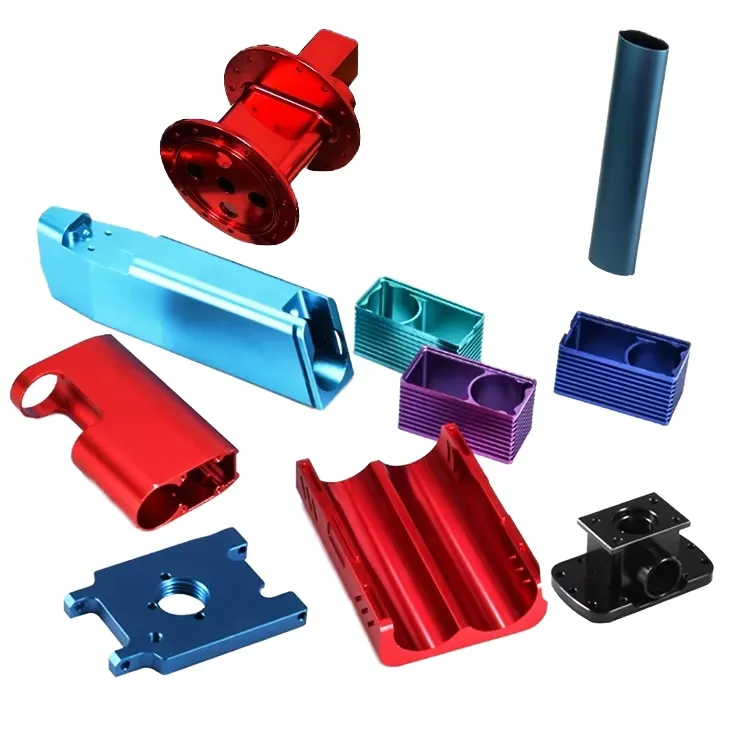
When you hold a finely textured aluminum alloy phone in your hand, or gaze at a building facade gleaming in the sunlight, you might not realize that behind these metal surfaces lies a mature and sophisticated technology—metal anodizing. This is a surface treatment process that uses electrochemical methods to allow a protective oxide film to “spontaneously grow” on the metal surface. It is widely used for light metals such as aluminum, magnesium, and titanium, as well as their alloys.
Unlike “external coatings” such as painting and electroplating, the anodized film grows directly from the metal substrate itself, completely fusing the two together, with absolutely no possibility of peeling or flaking. In its natural state, aluminum forms a natural oxide film only 4 nanometers thick in the air; however, after anodizing, the oxide film thickness can reach tens or even hundreds of micrometers, resulting in a qualitative leap in performance.
Unveiling the Electrochemical Principle
The core principle of anodizing is a controlled electrochemical oxidation reaction. The metal workpiece to be treated is used as the anode (positive electrode), and a lead plate or stainless steel plate is used as the cathode (negative electrode), both placed in an acidic electrolyte. When direct current passes through, an oxidation reaction occurs at the anode, where metal atoms combine with oxygen to form oxides; hydrogen gas is released at the cathode.
Most remarkably, the oxide film exhibits a honeycomb-like porous structure. During oxide film growth, the acidic electrolyte chemically dissolves the newly formed oxide film, creating countless nanoscale micropores perpendicular to the surface. These micropores not only give the oxide film extremely strong adsorption capacity but also provide a natural carrier for subsequent dyeing processes—this is why anodized products display such rich and vibrant colors.
Mainstream Processes and Applications
Currently, the most commonly used process in industry is sulfuric acid anodizing (Type II), using a 15-20% sulfuric acid solution at 18-22°C, resulting in a film thickness of 5-25 micrometers. This is the standard process for consumer electronics, building profiles, and general hardware. The refined metallic texture of products like iPhones and MacBooks originates from this process.
For applications requiring higher wear resistance, hard anodizing (Type III) is used. Performed at a low temperature of 0-5°C, it achieves a film thickness of 25-100 micrometers, with a hardness approaching that of ceramics, making it the preferred choice for aerospace, automotive engines, and hydraulic system components. The US military standard MIL-A-8625 has strict specifications for this.
In addition, chromic acid anodizing is used for precision aerospace parts, and oxalic acid anodizing is used for electronic insulating parts, each with its own applicable scenarios.
Performance improvements and technological advantages
The performance improvement brought by anodizing is revolutionary: surface hardness increases from HV30-50 to HV300-500, a 10-fold increase; salt spray corrosion resistance extends from less than 24 hours to over 500 hours, a 20-fold increase; the originally conductive metal surface becomes an excellent insulator, with a resistance reaching 10¹² Ω·cm.
Furthermore, anodizing has many unique advantages: the oxide film has extremely strong adhesion to the substrate and never peels off; rich color effects can be achieved through dyeing, from matte to glossy, from monochrome to gradient colors; the process is environmentally friendly and non-toxic, complying with international standards such as RoHS and REACH; anodized workpieces can still be machined and welded.
The Ubiquity of Anodizing
Anodizing technology has permeated all aspects of modern industry. In consumer electronics, it contributes to the exquisite appearance of smartphones and laptops; in aerospace, it safeguards the reliable operation of engine pistons and hydraulic components; in the automotive industry, it’s ubiquitous in wheels, interior parts, and cooling systems; in the medical field, anodizing significantly improves the biocompatibility of titanium alloy implants; and in construction, anodized doors, windows, and curtain walls guarantee 20 years of outdoor use without fading.
This classic technology, born in the 1920s, continues to thrive today. New technologies such as micro-arc oxidation, nano-functionalization modification, and green processes are constantly emerging, driving anodizing towards higher performance and greater environmental friendliness. It can be said that anodizing is not only a surface treatment technology but also a perfect combination of materials science and industrial aesthetics.
Shanghai Jinxi Precision Machinery Co., Ltd. offers additional anodizing services based on your customized precision parts processing needs, fully meeting your requirements. If you require customized CNC precision parts processing services, please feel free to contact us.