
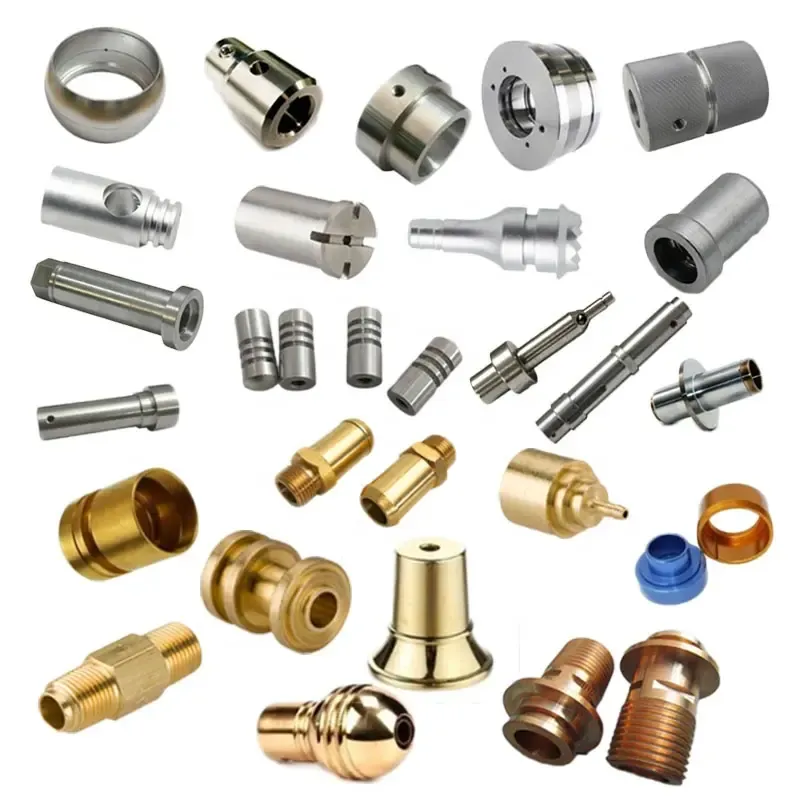
Aluminum CNC machining parts represent a cornerstone of modern manufacturing, offering exceptional versatility and reliability across countless industrial applications. These precision-engineered components are created through computer numerical control machining processes that transform raw aluminum stock into highly accurate, functional parts with tight tolerances and superior surface finishes. The main functions of aluminum cnc machining parts encompass structural support, mechanical linkages, housing enclosures, heat dissipation elements, and decorative components across aerospace, automotive, electronics, medical device, and consumer product industries. The technological features that distinguish aluminum cnc machining parts include their exceptional machinability characteristics, which enable complex geometries, intricate internal channels, and multi-axis operations to be executed with remarkable precision. Advanced CNC machining centers utilize sophisticated tooling strategies and cutting parameters specifically optimized for aluminum alloys, ensuring consistent dimensional accuracy while maintaining excellent surface quality. These parts benefit from aluminum’s inherent properties including lightweight construction, corrosion resistance, thermal conductivity, and recyclability. The machining process allows for tight geometric tolerances typically ranging from plus or minus 0.001 to 0.005 inches, depending on part complexity and application requirements. Surface treatments and anodizing processes can be applied to enhance durability, appearance, and performance characteristics. Applications for aluminum cnc machining parts span numerous industries where precision, reliability, and performance are paramount. In aerospace applications, these components serve as critical structural elements, brackets, housings, and interface components that must meet stringent safety and performance standards. Automotive manufacturers utilize aluminum cnc machining parts for engine components, transmission housings, suspension elements, and body panels to reduce vehicle weight while maintaining structural integrity. Electronic device manufacturers rely on these parts for heat sinks, enclosures, mounting brackets, and electromagnetic interference shielding solutions that protect sensitive circuitry while enabling efficient thermal management.
Aluminum cnc machining parts deliver substantial advantages that make them the preferred choice for demanding applications across multiple industries. The lightweight nature of aluminum provides immediate benefits by reducing overall system weight without compromising structural strength or durability. This weight reduction translates directly into improved fuel efficiency in transportation applications, reduced shipping costs, and easier handling during installation and maintenance procedures. The excellent strength-to-weight ratio of aluminum cnc machining parts enables engineers to design more efficient structures that meet or exceed performance requirements while minimizing material usage. Corrosion resistance stands as another significant advantage, as aluminum naturally forms a protective oxide layer that prevents degradation in challenging environmental conditions. This inherent protection eliminates the need for additional coatings or treatments in many applications, reducing long-term maintenance costs and extending service life. The superior thermal conductivity of aluminum cnc machining parts makes them ideal for heat management applications where efficient thermal transfer is critical. Electronic devices, LED lighting systems, and power electronics benefit from aluminum’s ability to dissipate heat effectively, preventing component overheating and ensuring reliable operation. Manufacturing efficiency represents a major advantage of aluminum cnc machining parts due to aluminum’s excellent machinability characteristics. Aluminum machines quickly and cleanly with minimal tool wear, enabling faster production cycles and reduced manufacturing costs compared to harder materials. The material’s chip evacuation properties and low cutting forces allow for higher machining speeds and feeds, improving overall productivity. Design flexibility emerges as a key benefit since aluminum cnc machining parts can achieve complex geometries, thin walls, and intricate features that would be difficult or impossible with other manufacturing methods. Multi-axis CNC capabilities enable the creation of parts with undercuts, internal channels, and complex contours in single setups, reducing assembly requirements and improving part accuracy. Cost-effectiveness becomes apparent when considering the total lifecycle costs of aluminum cnc machining parts. While initial material costs may be higher than some alternatives, the combination of reduced machining time, minimal finishing requirements, long service life, and recyclability creates compelling economic advantages. The ability to machine parts from solid billets eliminates welding, joining, or assembly operations that add complexity and potential failure points. Environmental sustainability provides growing importance as aluminum cnc machining parts offer complete recyclability without degradation of material properties. This characteristic supports circular economy principles and helps manufacturers meet increasingly stringent environmental regulations and corporate sustainability goals.
Exceptional Precision and Dimensional Accuracy
Aluminum cnc machining parts achieve remarkable precision levels that set industry standards for dimensional accuracy and geometric consistency. Modern CNC machining centers equipped with advanced control systems can maintain tolerances as tight as plus or minus 0.0005 inches across multiple part features, ensuring perfect fit and function in critical applications. This exceptional precision stems from aluminum’s stable machining characteristics combined with sophisticated machine tool capabilities that eliminate human error and variability from the manufacturing process. The material’s consistent properties and predictable behavior during machining operations enable manufacturers to achieve repeatable results across large production runs without dimensional drift or quality degradation. Temperature compensation systems integrated into CNC machines account for thermal expansion effects, maintaining accuracy even during extended production cycles. Multi-axis machining capabilities allow aluminum cnc machining parts to be completed in single setups, eliminating positioning errors and tolerance stack-up issues associated with multiple operations. Advanced measurement and inspection systems provide real-time feedback during machining operations, enabling immediate corrections and ensuring every part meets specified requirements. The precision achieved with aluminum cnc machining parts eliminates the need for secondary finishing operations in many applications, reducing production time and costs while improving overall quality. This accuracy extends to surface finish characteristics, with achievable roughness values ranging from 125 microinches Ra for standard machining to 16 microinches Ra or better for precision finishing operations. Critical features such as bearing surfaces, sealing surfaces, and mating interfaces can be machined to exacting specifications that ensure optimal performance and extended service life. The dimensional stability of aluminum cnc machining parts remains consistent over time, as the stress-relieved material maintains its geometry even under varying temperature and load conditions. Quality assurance protocols utilizing coordinate measuring machines and optical inspection systems verify dimensional accuracy throughout the production process, providing documented evidence of compliance with engineering specifications. This precision capability makes aluminum cnc machining parts ideal for applications where exact fit, smooth operation, and reliable performance are essential requirements that cannot be compromised.
Superior Material Properties and Performance
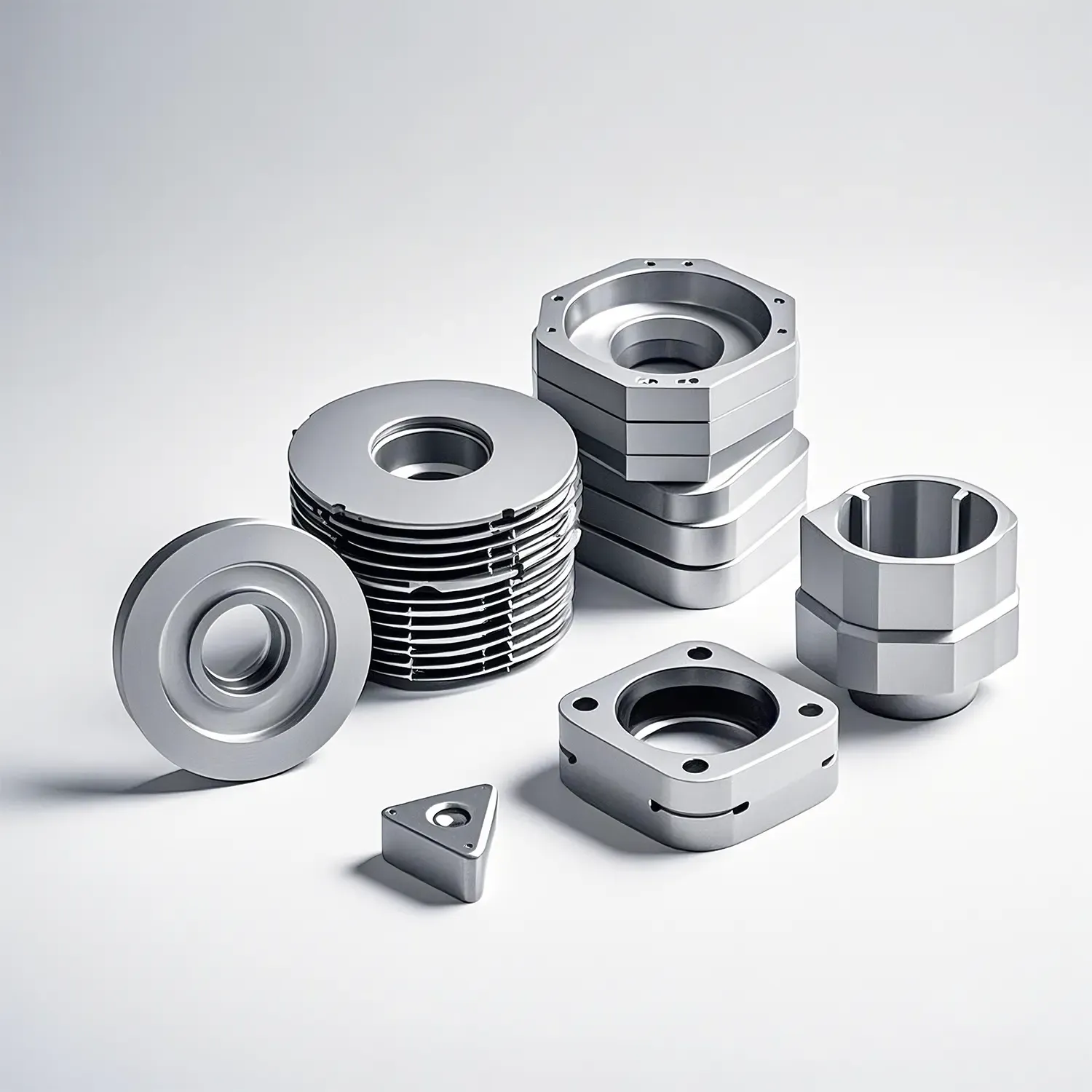
Aluminum cnc machining parts excel in performance-critical applications due to aluminum’s exceptional combination of physical and mechanical properties that provide distinct advantages over alternative materials. The strength-to-weight ratio of aluminum alloys used in CNC machining applications typically ranges from 130 to 200 MPa per gram per cubic centimeter, delivering structural integrity while maintaining lightweight characteristics essential for modern engineering applications. This superior ratio enables designers to create components that meet demanding load requirements without the weight penalties associated with steel or other heavy metals. Corrosion resistance represents a fundamental advantage of aluminum cnc machining parts, as the material’s natural oxide layer provides inherent protection against environmental degradation. This protective barrier reforms automatically if damaged, ensuring long-term durability in harsh conditions including marine environments, chemical exposure, and outdoor applications. The corrosion resistance can be enhanced further through anodizing processes that create thicker, more durable oxide layers with customizable colors and textures. Thermal properties of aluminum cnc machining parts make them indispensable for heat management applications where efficient thermal transfer is critical for system performance. With thermal conductivity values ranging from 150 to 240 watts per meter-kelvin depending on alloy composition, aluminum components effectively dissipate heat from electronic devices, engines, and industrial equipment. This thermal efficiency prevents overheating, extends component life, and maintains optimal operating temperatures in demanding applications. Electrical conductivity properties enable aluminum cnc machining parts to serve dual functions in applications requiring both structural support and electrical conduction. The material’s conductivity, approximately 60 percent that of copper, makes it suitable for electrical enclosures, grounding components, and electromagnetic shielding applications while providing significant weight savings. Fatigue resistance characteristics of properly designed aluminum cnc machining parts ensure reliable performance under cyclic loading conditions commonly encountered in automotive, aerospace, and industrial machinery applications. Advanced aluminum alloys demonstrate excellent fatigue strength when machined components incorporate proper stress concentration management through radius transitions, surface treatments, and optimized geometries. The machinability rating of aluminum alloys exceeds 200 percent compared to steel, enabling faster cutting speeds, longer tool life, and superior surface finishes that reduce post-processing requirements and improve manufacturing efficiency.
Versatile Design Flexibility and Customization Options
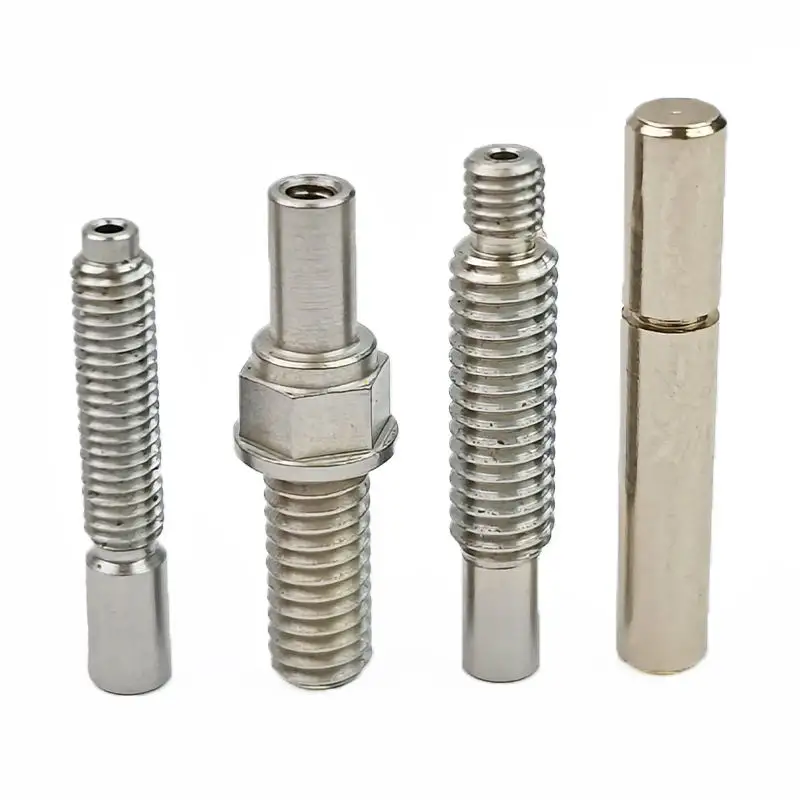
Aluminum cnc machining parts offer unparalleled design flexibility that enables engineers to create innovative solutions tailored to specific application requirements without the constraints imposed by traditional manufacturing methods. The exceptional machinability of aluminum allows for complex three-dimensional geometries, intricate internal passages, and sophisticated feature integration that would be impossible or cost-prohibitive using casting, forming, or fabrication techniques. Multi-axis CNC machining capabilities enable the creation of aluminum cnc machining parts with compound angles, undercuts, and internal features accessible from multiple directions in single machine setups. This capability eliminates assembly operations, reduces part count, and improves overall system reliability by creating monolithic components that eliminate potential failure points associated with joints, welds, or fasteners. Design optimization opportunities include weight reduction through strategic material removal, creating internal cavities for fluid passages or wire routing, and incorporating mounting features that eliminate separate brackets or hardware. The ability to machine thin walls and delicate features enables aluminum cnc machining parts to achieve optimal material distribution while maintaining structural integrity and functional performance. Surface texturing and decorative features can be machined directly into aluminum components, eliminating secondary operations and providing unique aesthetic appearances that enhance product appeal. Customization options extend to material selection, with numerous aluminum alloys available to match specific performance requirements including strength, corrosion resistance, thermal properties, and machinability characteristics. Thread forms, keyways, splines, and other mechanical features can be machined to exact specifications ensuring perfect compatibility with mating components and assemblies. The flexibility extends to production quantities, as aluminum cnc machining parts are equally suitable for prototype development, short production runs, and high-volume manufacturing without significant setup changes or tooling investments. Rapid prototyping capabilities enable quick design iterations and functional testing, accelerating product development cycles and reducing time-to-market for new products. Integration possibilities allow aluminum cnc machining parts to incorporate multiple functions within single components, such as combining structural support with heat dissipation, electrical conduction, or fluid flow management. Advanced CAD/CAM software integration enables direct translation of complex design concepts into machining programs, ensuring faithful reproduction of designer intent while optimizing machining efficiency and maintaining dimensional accuracy throughout the production process.