
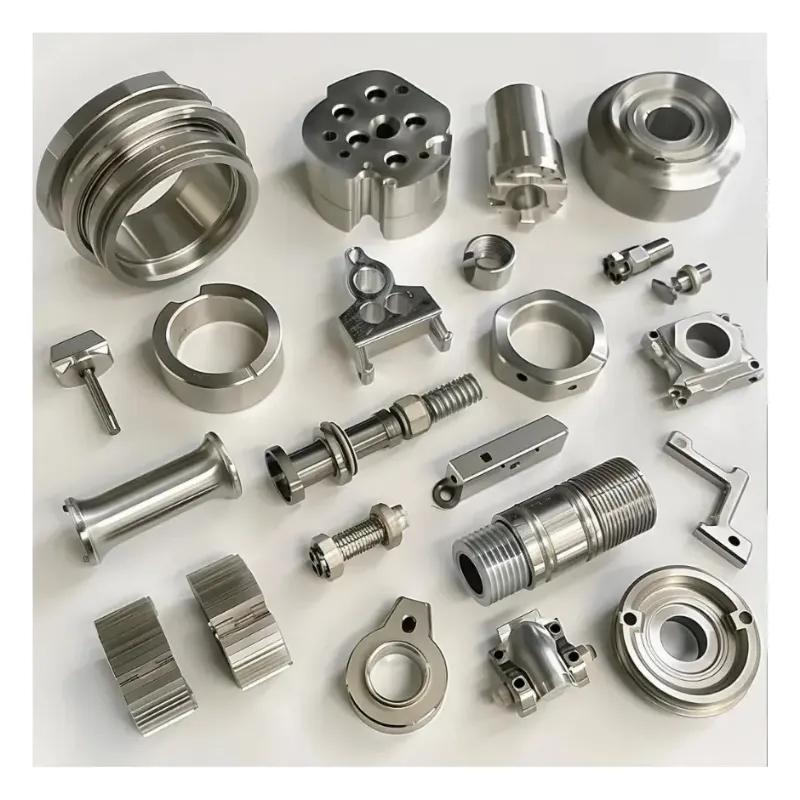
CNC precision parts represent the cornerstone of modern manufacturing excellence, delivering unparalleled accuracy and consistency across diverse industrial applications. These components are manufactured using Computer Numerical Control technology, which employs automated machinery guided by pre-programmed software to create parts with exceptional dimensional accuracy and surface finish quality. The main functions of cnc precision parts encompass providing critical components for aerospace systems, automotive assemblies, medical devices, electronics housings, and industrial machinery where tolerance requirements demand microscopic precision levels. The technological features that distinguish cnc precision parts include multi-axis machining capabilities, real-time quality monitoring systems, adaptive toolpath optimization, and integrated measurement protocols that ensure every component meets stringent specifications. Advanced CNC machines utilize sophisticated cutting tools, high-speed spindles, and precision workholding systems to achieve tolerances as tight as ±0.0001 inches while maintaining consistent repeatability across production runs. The manufacturing process incorporates computer-aided design integration, allowing seamless translation from digital blueprints to physical components without human interpretation errors. Temperature-controlled environments and vibration-dampened machinery further enhance the precision manufacturing process. Applications for cnc precision parts span critical industries where component failure is not acceptable, including aircraft engine components, surgical instrument manufacturing, semiconductor fabrication equipment, optical lens assemblies, and high-performance automotive transmission systems. These parts serve as essential elements in complex assemblies where dimensional accuracy directly impacts overall system performance and reliability. The versatility of CNC manufacturing enables production of components from various materials including aluminum alloys, stainless steel, titanium, brass, plastics, and exotic composites, each requiring specialized machining parameters to achieve optimal results.
The advantages of cnc precision parts extend far beyond basic manufacturing capabilities, offering tangible benefits that directly impact your bottom line and operational efficiency. Superior dimensional accuracy eliminates costly rework and assembly issues, ensuring components fit perfectly on the first attempt and reducing production delays that plague traditional manufacturing methods. This precision translates to significant cost savings by minimizing material waste, reducing quality control rejections, and eliminating expensive field failures that damage your reputation. Consistent repeatability means every cnc precision part matches the original specifications exactly, regardless of production volume or timeline, providing reliable supply chain stability for your operations. The automated nature of CNC manufacturing delivers faster turnaround times compared to manual machining processes, enabling rapid prototyping and quick response to changing market demands without sacrificing quality standards. Enhanced surface finishes achieved through precision machining reduce friction, improve wear resistance, and extend component lifespan, ultimately lowering maintenance costs and replacement frequencies. Material optimization capabilities allow cnc precision parts to be manufactured with minimal waste, maximizing raw material utilization and reducing environmental impact while controlling production expenses. The ability to work with diverse materials expands design possibilities, enabling engineers to select optimal materials for specific applications without worrying about manufacturing limitations. Quality assurance is built into every step of the CNC process through integrated measurement systems and statistical process control, providing documented proof of compliance with your specifications. Scalability advantages allow production volumes to be adjusted efficiently, whether you need single prototypes or thousands of production parts, without significant setup changes or tooling modifications. Design flexibility enables complex geometries and intricate features that would be impossible or extremely expensive using conventional manufacturing methods. Reduced lead times accelerate product development cycles, helping you reach market faster and respond quickly to customer requirements. Long-term cost effectiveness emerges through reduced labor requirements, minimized human error, and consistent production efficiency that improves overall manufacturing economics.
Unmatched Dimensional Accuracy and Quality Control
The dimensional accuracy achieved by cnc precision parts sets the gold standard for modern manufacturing, delivering tolerances that exceed industry expectations and customer requirements. This exceptional precision stems from advanced machine tool technology that eliminates human variability and environmental inconsistencies that plague traditional manufacturing methods. Computer-controlled positioning systems ensure cutting tools follow exact predetermined paths with microscopic precision, while real-time feedback mechanisms continuously monitor and adjust machining parameters to maintain optimal conditions throughout the production cycle. The quality control advantages extend beyond simple dimensional compliance, encompassing surface finish consistency, geometric tolerancing, and material integrity verification that traditional methods cannot match. Integrated measurement systems perform continuous quality checks during machining operations, immediately detecting any deviations from specifications and making automatic corrections before defective parts can be produced. This proactive approach eliminates waste, reduces inspection time, and provides documented quality assurance that meets the most stringent industry standards. The precision capabilities enable manufacturing of components with complex geometries and tight tolerances that would be impossible using conventional machining methods, opening new design possibilities for engineers and product developers. Temperature compensation systems account for thermal expansion effects, ensuring dimensional stability even during extended production runs or varying ambient conditions. Statistical process control integration provides comprehensive data tracking and trend analysis, enabling predictive maintenance and continuous improvement initiatives that further enhance quality outcomes. The repeatability of cnc precision parts ensures that every component produced meets identical specifications, regardless of production volume or manufacturing timeline, providing supply chain reliability that customers can depend on. Quality documentation systems generate complete traceability records for each part, including material certifications, machining parameters, inspection results, and operator information, supporting regulatory compliance requirements in critical industries like aerospace and medical device manufacturing.
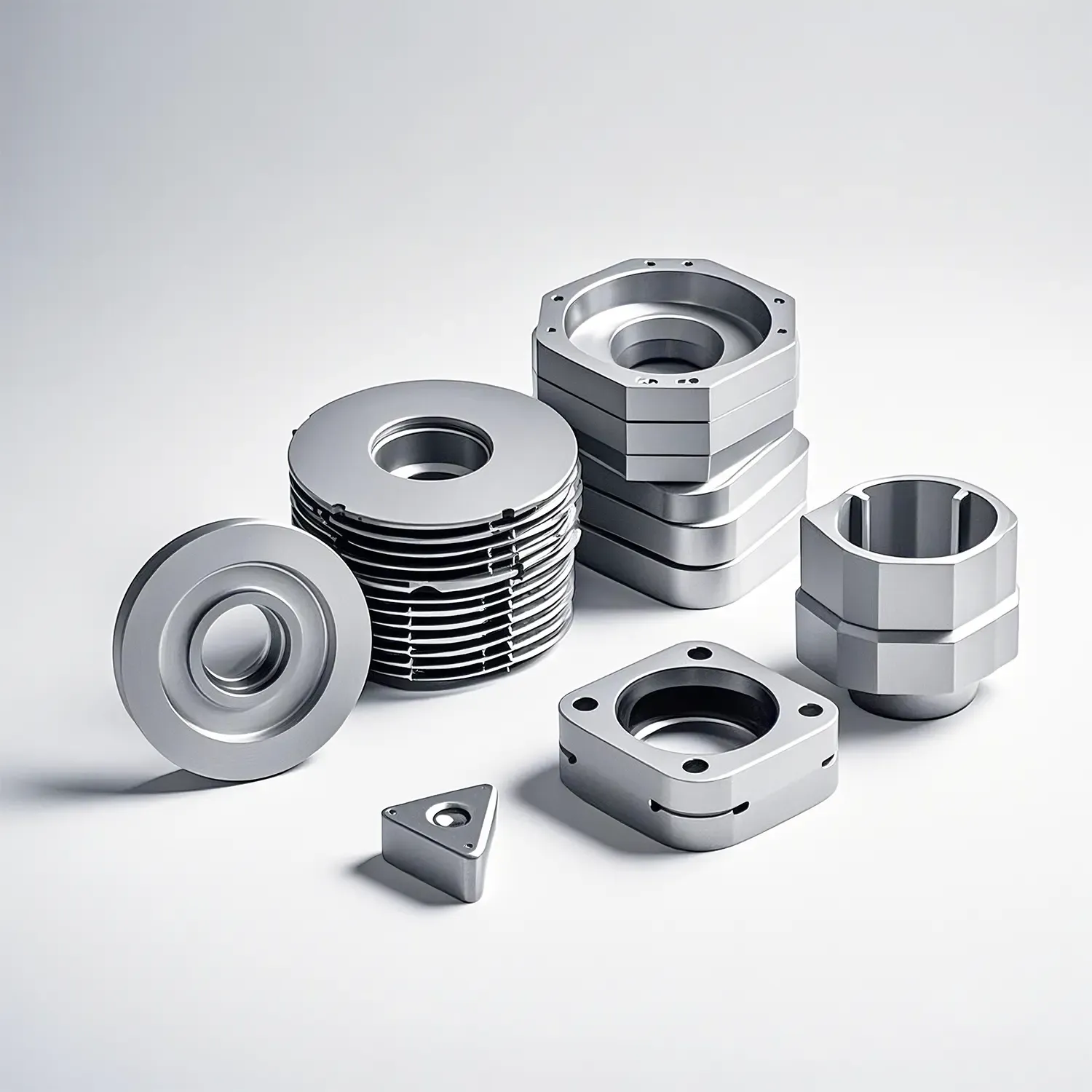
Advanced Material Versatility and Engineering Solutions
The material versatility of cnc precision parts opens unlimited engineering possibilities, enabling designers to select optimal materials for specific applications without worrying about manufacturing constraints or limitations. This comprehensive material compatibility extends across metallic alloys including aluminum, stainless steel, titanium, brass, copper, and exotic superalloys, as well as engineering plastics, composites, and ceramic materials that require specialized machining expertise. Each material presents unique challenges in terms of cutting parameters, tool selection, and workholding requirements, but advanced CNC systems adapt seamlessly to these variations through programmable machining strategies and automatic tool compensation systems. The ability to machine difficult materials like titanium and Inconel expands application possibilities into aerospace and medical industries where material properties are critical for performance and safety. Specialized cutting tools and cooling systems ensure optimal machining conditions for each material type, preventing work hardening, thermal damage, or surface contamination that could compromise component integrity. Material optimization algorithms minimize waste by calculating optimal cutting paths and nesting strategies that maximize raw material utilization while maintaining structural integrity requirements. The precision machining process preserves material properties and grain structure, ensuring that finished cnc precision parts retain the mechanical characteristics specified by material suppliers and design engineers. Surface treatment compatibility allows subsequent processing operations like anodizing, plating, heat treating, or coating application without compromising dimensional accuracy or surface finish quality. Multi-material assembly capabilities enable production of complex components that combine different materials within a single part, creating innovative solutions for weight reduction, thermal management, or electromagnetic shielding applications. Quality assurance protocols verify material compliance through chemical analysis, mechanical testing, and microstructural examination, providing complete material traceability and certification documentation. The engineering support provided by CNC manufacturers includes material selection guidance, design optimization recommendations, and manufacturability analysis that helps customers achieve optimal performance while controlling costs and lead times.
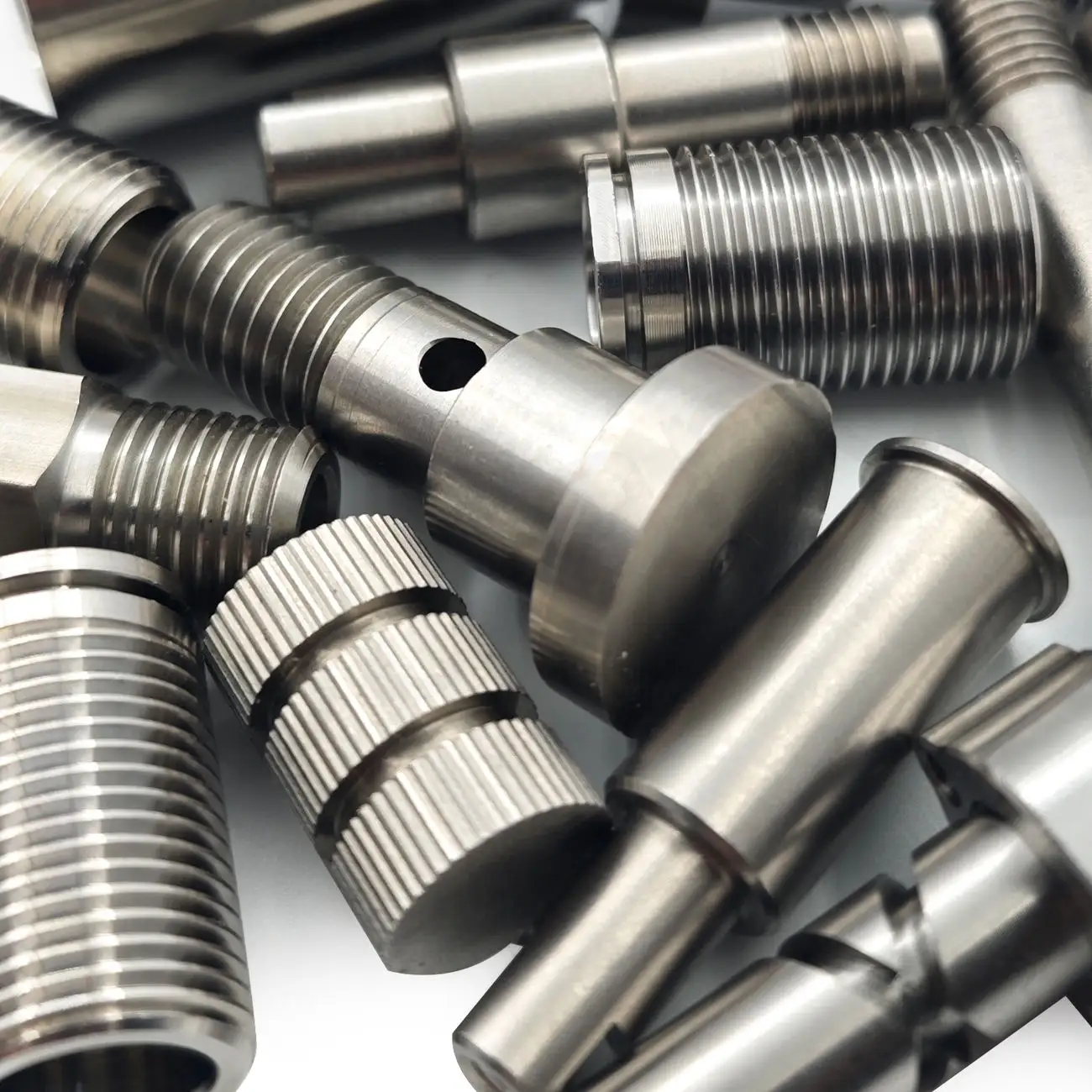
Rapid Production and Scalable Manufacturing Excellence
The rapid production capabilities of cnc precision parts revolutionize manufacturing timelines, enabling faster product development cycles and quicker response to market demands without compromising quality or precision standards. This speed advantage emerges from automated setup procedures, unmanned machining operations, and optimized toolpath strategies that maximize spindle utilization and minimize non-productive time throughout the manufacturing process. Advanced CAM software generates efficient machining programs that reduce cycle times while maintaining surface finish requirements and dimensional accuracy, enabling higher throughput without sacrificing quality outcomes. Lights-out manufacturing capabilities allow cnc precision parts production to continue during nights and weekends, effectively tripling production capacity without additional labor costs or supervision requirements. The scalability advantages accommodate varying production volumes seamlessly, whether customers require single prototypes for testing or thousands of production parts for assembly operations, without significant setup changes or tooling modifications. Flexible manufacturing systems enable rapid changeovers between different part numbers, supporting just-in-time delivery requirements and reducing inventory carrying costs for customers. Automated tool changing systems eliminate manual intervention during machining cycles, ensuring consistent cutting conditions and reducing the risk of human error that could compromise part quality or dimensional accuracy. Production scheduling software optimizes machine utilization across multiple cnc precision parts orders, minimizing lead times and ensuring on-time delivery performance that customers can rely on for their critical manufacturing schedules. Real-time production monitoring systems provide instant visibility into manufacturing progress, enabling proactive communication with customers regarding delivery status and potential schedule adjustments. The efficiency gains translate directly into cost advantages through reduced labor requirements, lower overhead allocation, and improved asset utilization that benefits both manufacturers and customers. Continuous improvement initiatives leverage production data analysis to identify optimization opportunities, implement process enhancements, and achieve even better performance metrics over time. Quality consistency remains constant regardless of production volume or scheduling pressures, ensuring that cnc precision parts meet specifications whether produced individually or in large batches, providing customers with reliable supply chain performance they can trust for their most critical applications.