
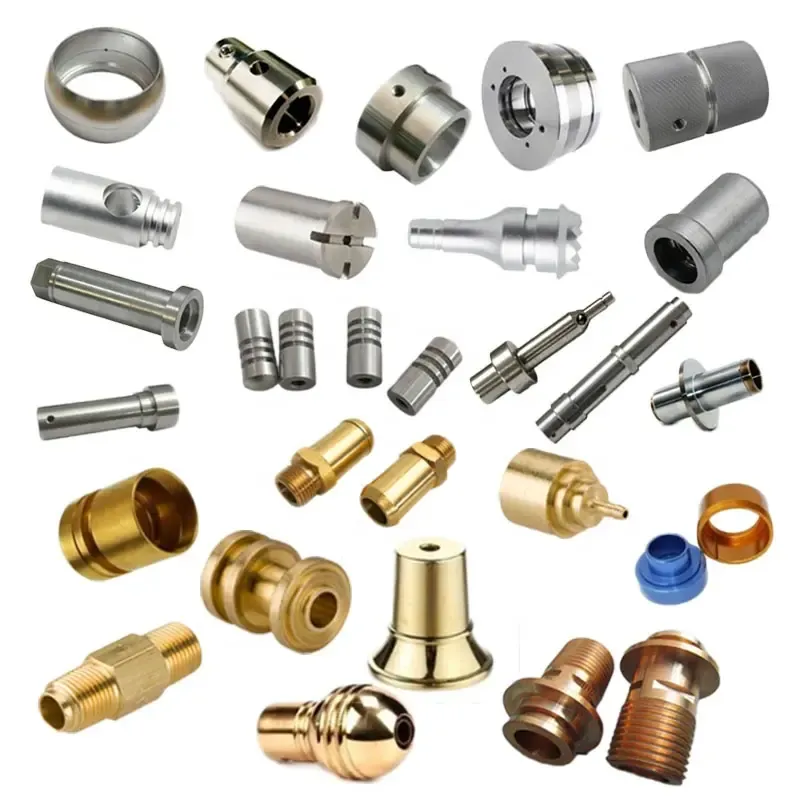
A cnc turned parts manufacturer represents a specialized industrial enterprise that utilizes computer numerical control (CNC) turning technology to produce precision-engineered components across diverse sectors. These manufacturers operate sophisticated CNC lathes and turning centers that rotate workpieces while cutting tools shape materials into exact specifications. The primary functions encompass designing, prototyping, machining, and delivering custom turned components that meet stringent quality standards and dimensional tolerances. Modern cnc turned parts manufacturer facilities integrate advanced CAD/CAM software systems with multi-axis turning equipment, enabling simultaneous operations that significantly reduce production cycles while maintaining exceptional accuracy. The technological infrastructure typically includes automated tool changers, live tooling capabilities, and real-time monitoring systems that ensure consistent quality throughout production runs. These manufacturers work with various materials including stainless steel, aluminum, brass, titanium, plastics, and exotic alloys, adapting their processes to material-specific requirements. Quality control systems incorporate coordinate measuring machines, surface finish analyzers, and statistical process control protocols that validate every component against customer specifications. Production capabilities range from single prototypes to high-volume manufacturing runs, with many facilities offering secondary operations such as threading, knurling, grooving, and surface treatments. The applications span numerous industries including aerospace, automotive, medical devices, electronics, telecommunications, defense, and industrial machinery. Aerospace applications demand components with exceptional precision and material certifications, while medical device manufacturers require biocompatible materials and FDA-compliant processes. Automotive sector applications focus on durability and cost-effectiveness, whereas electronics industry requirements emphasize miniaturization and tight tolerances. The cnc turned parts manufacturer ecosystem continues evolving with Industry 4.0 integration, incorporating IoT sensors, predictive maintenance algorithms, and artificial intelligence-driven optimization systems that enhance productivity and reduce waste.
Working with a reputable cnc turned parts manufacturer delivers substantial benefits that directly impact your project success and bottom line. Cost efficiency represents a primary advantage, as these manufacturers leverage economies of scale and optimized production processes to deliver competitive pricing without compromising quality standards. Their specialized expertise eliminates the need for internal machining capabilities, reducing capital investment in expensive equipment and skilled personnel while providing access to cutting-edge technology and industry knowledge. Speed and reliability form another crucial advantage, with established cnc turned parts manufacturer operations maintaining streamlined workflows that accelerate project timelines from initial design through final delivery. These manufacturers typically maintain extensive inventory management systems and supplier networks that ensure consistent material availability and prevent production delays. Quality assurance represents a fundamental strength, as professional manufacturers implement comprehensive inspection protocols and certification processes that guarantee components meet or exceed specified requirements. Their quality management systems often include ISO certifications, AS9100 aerospace standards, and FDA medical device compliance, providing customers with documented traceability and regulatory adherence. Scalability offers significant flexibility advantages, allowing customers to adjust order quantities based on market demands without worrying about production capacity constraints or equipment limitations. A professional cnc turned parts manufacturer can seamlessly transition from prototype quantities to full production volumes while maintaining consistent quality and delivery schedules. Technical support and engineering collaboration enhance project outcomes through design optimization recommendations, material selection guidance, and manufacturability assessments that identify potential cost savings and performance improvements early in the development process. Risk mitigation becomes another valuable benefit, as established manufacturers maintain backup equipment, redundant processes, and disaster recovery protocols that protect against supply chain disruptions. Their experience across multiple industries provides valuable insights into best practices, regulatory requirements, and quality standards that help customers avoid costly mistakes and delays. Additionally, partnering with a specialized cnc turned parts manufacturer allows companies to focus their resources on core competencies while leveraging external expertise for non-core manufacturing activities, ultimately improving overall operational efficiency and competitive positioning in their respective markets.
Advanced Multi-Axis CNC Technology and Precision Engineering
The cornerstone of any exceptional cnc turned parts manufacturer lies in their investment in state-of-the-art multi-axis CNC turning technology that delivers unparalleled precision and manufacturing flexibility. Modern facilities house sophisticated turning centers equipped with live tooling capabilities, sub-spindle operations, and Y-axis functionality that enable complete part machining in single setups, dramatically reducing handling time and improving dimensional accuracy. These advanced machines incorporate high-resolution encoders and feedback systems that maintain positional accuracy within microns, ensuring every turned component meets the most demanding tolerance requirements. The integration of adaptive control systems automatically adjusts cutting parameters based on real-time monitoring of tool wear, vibration, and surface finish conditions, maintaining consistent quality throughout extended production runs. Swiss-type turning centers excel at producing small, complex components with exceptional length-to-diameter ratios, while larger horizontal and vertical turning centers handle substantial workpieces with equal precision. The cnc turned parts manufacturer utilizes advanced tooling systems including ceramic, carbide, and diamond-coated cutting tools optimized for specific materials and applications, maximizing tool life and surface finish quality. Sophisticated workholding systems including hydraulic chucks, collets, and custom fixtures ensure secure part positioning while minimizing distortion and maintaining concentricity requirements. Real-time process monitoring through integrated sensors and data acquisition systems enables predictive maintenance scheduling and immediate detection of anomalies that could affect part quality. The technological superiority extends to programming capabilities, with advanced CAM software generating optimized toolpaths that minimize cycle times while maximizing tool life and surface finish quality. This technological foundation enables the cnc turned parts manufacturer to consistently deliver components with superior dimensional accuracy, surface finish specifications, and geometric tolerances that meet or exceed customer expectations across diverse applications and industries.
Comprehensive Quality Management and Certification Systems
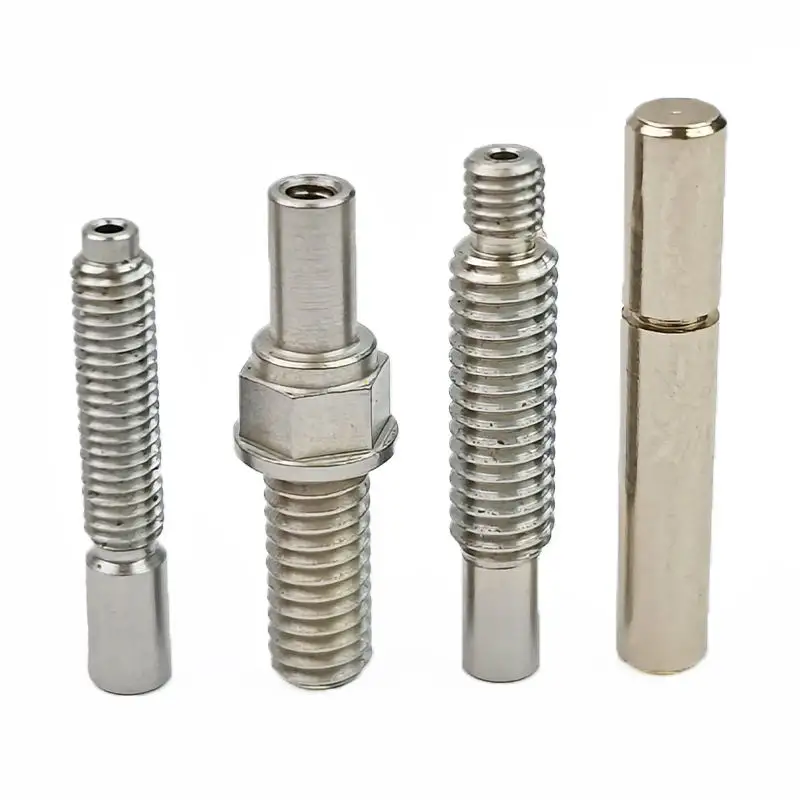
A distinguished cnc turned parts manufacturer implements robust quality management systems that encompass every aspect of the manufacturing process, from incoming material inspection through final product delivery and customer support. These comprehensive systems typically achieve multiple certifications including ISO 9001 quality management, AS9100 aerospace standards, ISO 13485 medical devices, and ITAR registration for defense applications, demonstrating their commitment to meeting industry-specific requirements and regulatory compliance. The quality infrastructure includes climate-controlled inspection rooms housing coordinate measuring machines, optical comparators, surface roughness testers, and hardness testing equipment that validate every critical dimension and specification. Statistical process control protocols monitor key process parameters continuously, generating real-time data that enables immediate corrective actions when variations approach specification limits. Incoming material certification programs verify chemical composition, mechanical properties, and traceability documentation for all raw materials, ensuring consistent starting points for every production lot. The cnc turned parts manufacturer maintains detailed quality records that provide complete traceability from raw material certificates through machining parameters, inspection results, and shipping documentation. First article inspection protocols validate new setups and process changes, while in-process monitoring ensures continued conformance throughout production runs. Advanced measurement techniques including non-contact optical scanning and laser interferometry enable precise evaluation of complex geometries and surface characteristics that traditional measurement methods cannot assess. Quality personnel receive ongoing training in measurement techniques, statistical analysis, and industry standards to maintain proficiency with evolving requirements and technologies. Supplier quality programs extend quality standards throughout the supply chain, ensuring that secondary operations, special processes, and material suppliers meet equivalent quality standards. Customer-specific quality requirements receive dedicated attention through customized inspection protocols, special packaging procedures, and documentation formats that align with individual customer systems and preferences. This comprehensive approach to quality management provides customers with confidence that every component will perform reliably in their critical applications while meeting all specified requirements and industry standards.
Rapid Prototyping and Scalable Production Capabilities
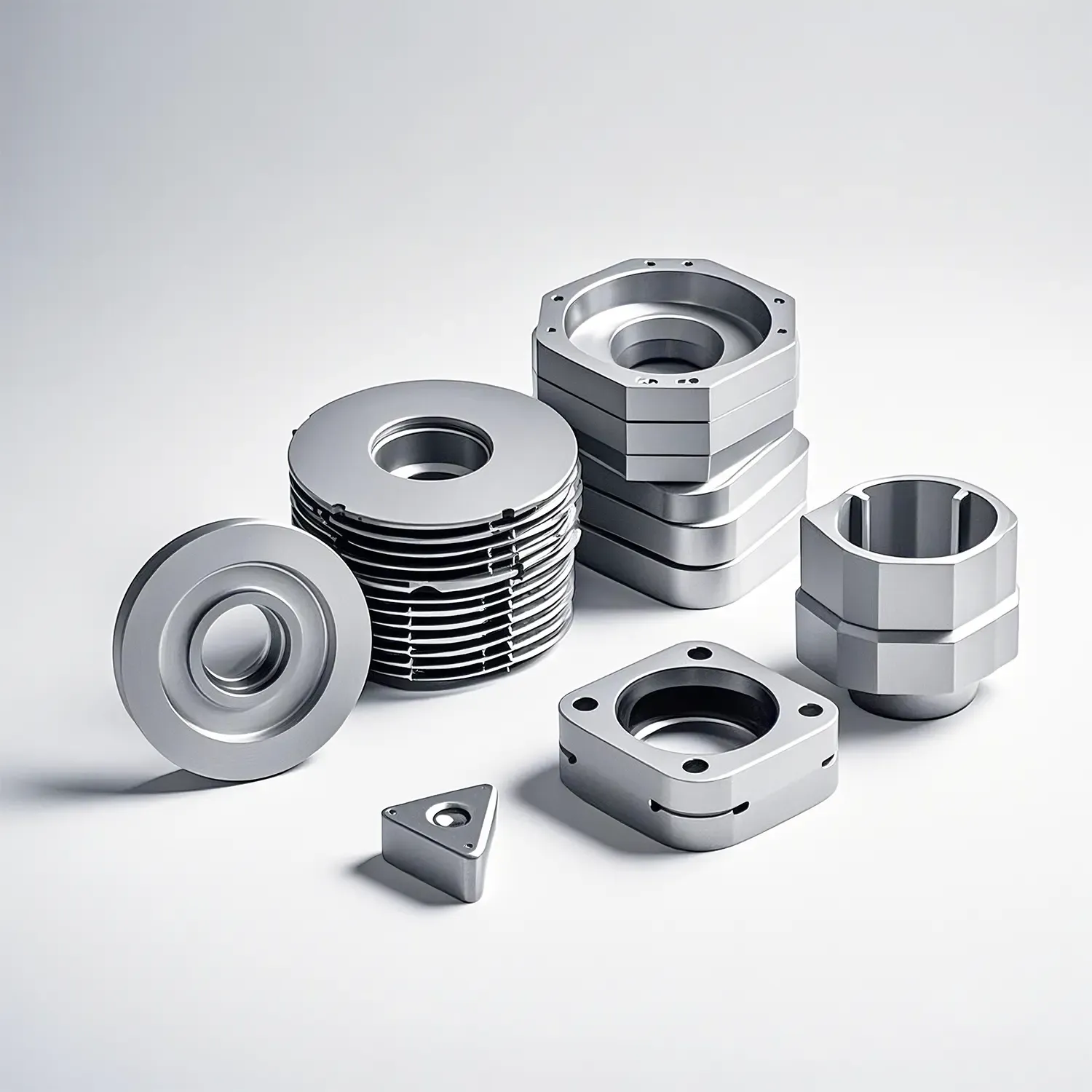
The ability to seamlessly transition from rapid prototyping through high-volume production represents a critical competitive advantage that sets exceptional cnc turned parts manufacturer operations apart from conventional machine shops. This flexibility begins with advanced quoting systems that quickly evaluate part geometry, material requirements, and production quantities to provide accurate pricing and delivery commitments within hours rather than days. Rapid prototyping capabilities utilize dedicated machines and expedited processes that can deliver initial samples within 24-48 hours for urgent projects, enabling accelerated product development cycles and faster time-to-market achievements. The cnc turned parts manufacturer maintains flexible scheduling systems that accommodate rush orders, engineering changes, and fluctuating demand patterns without disrupting existing production commitments. Scalability infrastructure includes multiple machine configurations that can efficiently handle different volume requirements, from single prototypes requiring extensive setup and programming to high-volume runs that benefit from dedicated fixtures and optimized cycle times. Advanced planning systems optimize machine utilization and production scheduling based on part complexity, material requirements, and delivery dates, ensuring maximum efficiency across all volume levels. The manufacturing flexibility extends to material handling capabilities, with inventory management systems that maintain strategic stock levels of common materials while providing rapid procurement capabilities for specialty alloys and exotic materials. Engineering support services include design for manufacturability reviews that identify opportunities for cost reduction and process optimization during the transition from prototype to production volumes. Value engineering consultations help customers optimize their designs for efficient manufacturing while maintaining functional requirements and performance specifications. Production scaling protocols ensure that process parameters, quality standards, and delivery performance remain consistent as volumes increase from prototype quantities through full production runs. The cnc turned parts manufacturer utilizes modular manufacturing approaches that enable rapid capacity expansion during peak demand periods while maintaining cost competitiveness during lower volume periods. This comprehensive production flexibility provides customers with a single source solution that supports their projects throughout the entire product lifecycle, from initial concept validation through end-of-life production requirements.