
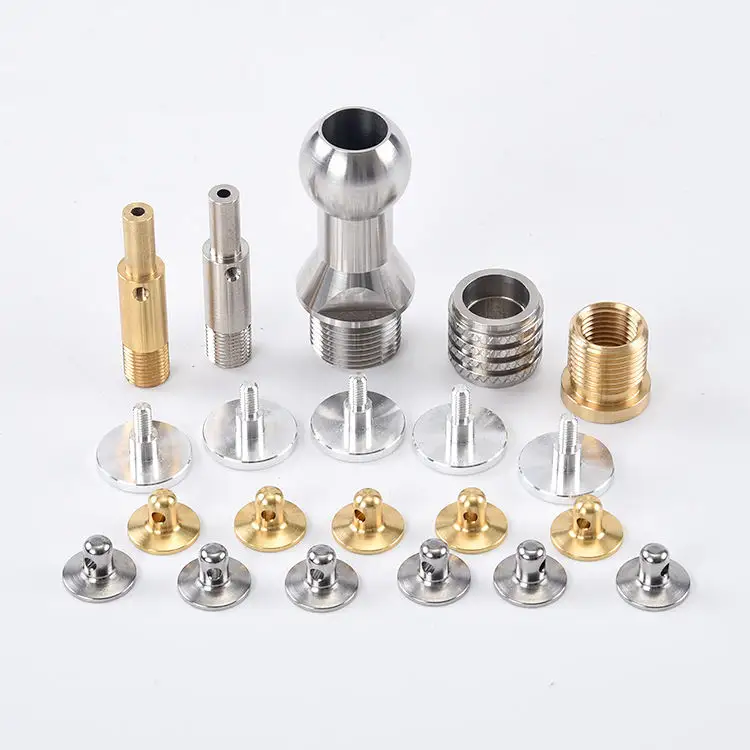
Custom precision machined parts represent the cornerstone of modern manufacturing excellence, delivering engineered components that meet exact specifications with remarkable accuracy. These specialized components are manufactured using advanced computer numerical control (CNC) machines and cutting-edge manufacturing technologies to achieve tolerances as tight as ±0.0001 inches. The primary function of custom precision machined parts involves creating components that perfectly fit specific applications where standard off-the-shelf parts cannot deliver the required performance or dimensional accuracy. Manufacturing processes utilize state-of-the-art equipment including multi-axis CNC mills, precision lathes, grinding machines, and electrical discharge machining (EDM) systems. These sophisticated manufacturing methods enable the production of complex geometries, intricate internal features, and surface finishes that meet the most demanding requirements. Technological features encompass advanced material compatibility, allowing fabrication from metals such as aluminum, stainless steel, titanium, brass, and exotic alloys, as well as engineering plastics and composites. Quality control systems incorporate coordinate measuring machines (CMM), optical comparators, and statistical process control to ensure each component meets specified requirements. Applications span numerous industries including aerospace, automotive, medical devices, electronics, defense, and industrial machinery. In aerospace applications, custom precision machined parts create critical components for engines, landing gear, and flight control systems where failure is not an option. The automotive sector relies on these components for transmission parts, engine components, and safety systems that demand consistent performance. Medical device manufacturing utilizes custom precision machined parts for surgical instruments, implants, and diagnostic equipment where biocompatibility and precision are paramount. Electronics applications include heat sinks, enclosures, and connector components that require precise dimensions for proper functionality. The manufacturing process begins with detailed engineering drawings and specifications, followed by material selection, tooling setup, and rigorous quality inspection throughout production to ensure every custom precision machined part meets or exceeds customer expectations.
Custom precision machined parts deliver substantial benefits that transform manufacturing operations and product performance across multiple dimensions. These components provide exceptional dimensional accuracy that eliminates costly rework and assembly problems, ensuring perfect fit and function in critical applications. Manufacturing tolerances achieve levels impossible with conventional production methods, creating components that maintain consistency batch after batch. Cost efficiency emerges through reduced waste, minimized assembly time, and elimination of secondary operations typically required with less precise alternatives. Custom precision machined parts reduce overall project timelines by delivering components that require no additional finishing or modification before installation. Quality assurance reaches unprecedented levels through advanced inspection techniques and statistical process control, guaranteeing each component meets exact specifications. Material optimization allows manufacturers to select the ideal material properties for specific applications, whether requiring corrosion resistance, high strength-to-weight ratios, or specialized thermal characteristics. Design flexibility enables creation of complex geometries and features that would be impossible or prohibitively expensive using other manufacturing methods. Custom precision machined parts support rapid prototyping and design iteration, allowing engineers to test and refine concepts quickly and cost-effectively. Production scalability accommodates everything from single prototype components to high-volume production runs without sacrificing quality or precision. Supply chain simplification occurs when multiple manufacturing operations are consolidated into single setups, reducing handling, transportation, and inventory costs. Performance reliability increases dramatically when components are manufactured to exact specifications, reducing failure rates and maintenance requirements in critical applications. Custom precision machined parts enable weight reduction through optimized material distribution and advanced geometries, particularly important in aerospace and automotive applications where every gram matters. Surface finish quality achieves levels that eliminate the need for additional finishing operations, saving time and reducing costs. Compatibility assurance ensures new components integrate seamlessly with existing systems and components, reducing engineering time and potential compatibility issues. Long-term durability improves when components are manufactured from optimal materials using precise manufacturing techniques, extending service life and reducing replacement frequency. Custom precision machined parts provide competitive advantages by enabling product differentiation and performance improvements that set manufacturers apart in competitive markets.
Unmatched Dimensional Accuracy and Tolerance Control
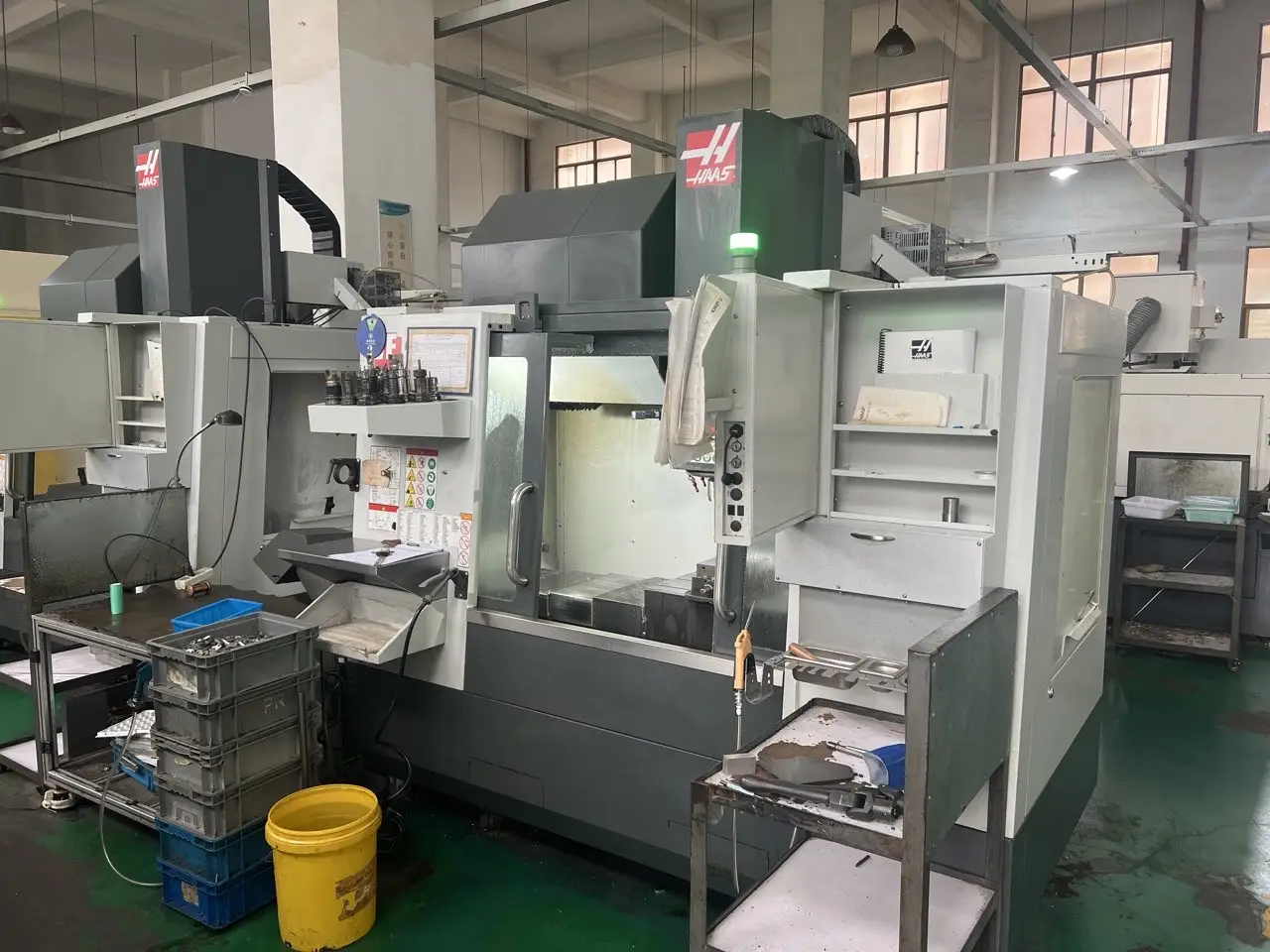
Custom precision machined parts achieve dimensional accuracy levels that fundamentally transform product quality and manufacturing efficiency. Advanced CNC machining centers equipped with high-resolution encoders and thermal compensation systems maintain tolerances within ±0.0001 inches consistently across production runs. This exceptional precision eliminates the cumulative errors that plague conventional manufacturing methods, ensuring every component fits perfectly without modification or adjustment. Temperature-controlled manufacturing environments and precision tooling systems contribute to this remarkable accuracy by minimizing thermal expansion and tool deflection variables. Quality control protocols incorporate coordinate measuring machines with touch probes and laser scanning capabilities that verify dimensions in three-dimensional space with unprecedented accuracy. Statistical process control monitors dimensional variations in real-time, enabling immediate corrections before tolerances drift outside acceptable limits. The economic impact of this precision extends far beyond initial manufacturing costs, as properly dimensioned components reduce assembly time, eliminate rework, and prevent costly field failures. Custom precision machined parts with superior dimensional control enable designers to optimize clearances and fits, improving product performance while reducing material usage. Automated inspection systems document dimensional compliance for every component, providing traceability and quality assurance documentation that meets the most stringent industry standards. This level of dimensional control proves particularly crucial in applications where component interaction determines system performance, such as hydraulic valves, precision bearings, and optical assemblies. Manufacturing processes utilize adaptive machining technologies that compensate for material variations and tool wear automatically, maintaining consistent dimensional accuracy throughout extended production runs. The combination of advanced machinery, environmental controls, and quality systems ensures custom precision machined parts deliver the dimensional reliability that modern manufacturing demands, enabling customers to focus on innovation rather than constantly troubleshooting dimensional problems.
Advanced Material Compatibility and Engineering Solutions
Custom precision machined parts excel in material versatility, enabling manufacturers to specify exactly the right material properties for each unique application requirement. Advanced machining capabilities handle an extensive range of materials including aerospace-grade aluminum alloys, medical-grade stainless steels, high-temperature superalloys, and specialized engineering plastics with equal proficiency. Material selection optimization considers factors such as strength-to-weight ratios, corrosion resistance, thermal properties, electrical conductivity, and biocompatibility to ensure optimal performance in specific operating environments. Exotic materials like titanium, Inconel, and Hastelloy are machined using specialized tooling and cutting parameters developed specifically for their unique properties, enabling applications in extreme environments where conventional materials would fail. Surface treatment compatibility allows custom precision machined parts to accept specialized coatings, anodizing, heat treatments, and other finishing processes that enhance performance characteristics. Material certifications and traceability documentation accompany each shipment, providing complete material pedigree from raw stock to finished component for industries requiring strict material compliance. Advanced machining techniques accommodate materials with challenging characteristics such as work-hardening tendencies, low thermal conductivity, or abrasive properties that would cause problems in conventional manufacturing. Custom precision machined parts enable lightweighting strategies through optimized material distribution and advanced geometries that remove material only where it provides no structural benefit. Biocompatible materials processed under controlled conditions meet FDA and ISO standards for medical device applications, ensuring patient safety and regulatory compliance. Material property optimization occurs through careful selection of heat treatment conditions, grain structure control, and surface finish specifications that maximize performance in intended applications. Quality control procedures verify material properties through hardness testing, grain structure analysis, and chemical composition verification to ensure consistency and compliance. The ability to work with such diverse materials enables custom precision machined parts to address virtually any engineering challenge, providing solutions where standard components simply cannot deliver the required performance, durability, or compliance characteristics.
Rapid Prototyping and Production Scalability Excellence
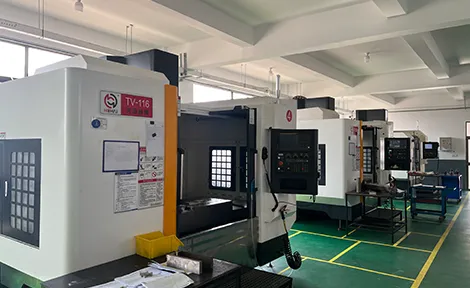
Custom precision machined parts provide unparalleled flexibility in transitioning from initial prototype development through high-volume production without compromising quality or dimensional accuracy. Rapid prototyping capabilities enable engineers to transform concepts into functional components within days rather than weeks, accelerating product development cycles and reducing time-to-market pressures. Advanced CAD/CAM integration allows direct translation of design files into machining programs, eliminating manual programming time and reducing the potential for human error in the manufacturing process. Production scalability accommodates everything from single prototype pieces to production runs exceeding hundreds of thousands of components while maintaining identical quality standards and dimensional characteristics. Flexible manufacturing systems enable rapid changeovers between different component configurations, supporting lean manufacturing principles and just-in-time delivery requirements. Custom precision machined parts support iterative design improvement by enabling rapid production of design variations for testing and evaluation, allowing engineers to optimize performance before committing to tooling investments. Manufacturing efficiency improves dramatically when prototype tooling and processes transfer directly to production environments, eliminating the traditional gap between prototype and production quality. Quick-turn capabilities respond to urgent engineering needs and market opportunities that require compressed development schedules without sacrificing quality or precision. Production planning systems optimize manufacturing sequences and resource allocation to minimize lead times while maximizing equipment utilization across diverse component requirements. Custom precision machined parts enable concurrent engineering approaches where manufacturing considerations influence design decisions early in the development process, preventing costly redesigns later in the project. Scalability advantages extend to supply chain management, where single-source capabilities reduce vendor management complexity and improve delivery coordination. Quality consistency remains constant regardless of production volume, ensuring prototype performance translates directly to production components without degradation or variation. Manufacturing data analytics track production metrics and identify optimization opportunities that improve efficiency and reduce costs as volumes increase. The seamless transition from prototype to production eliminates the risks and delays associated with transferring manufacturing to different suppliers or processes, providing customers with reliable, predictable outcomes throughout the entire product lifecycle while maintaining the precision and quality that custom precision machined parts deliver consistently.