
Seizing Opportunities in Embodied AI: Shanghai Jinxi Precision Receives Surge of Orders for Humanoid Robot & Liquid Cooling Computing Components
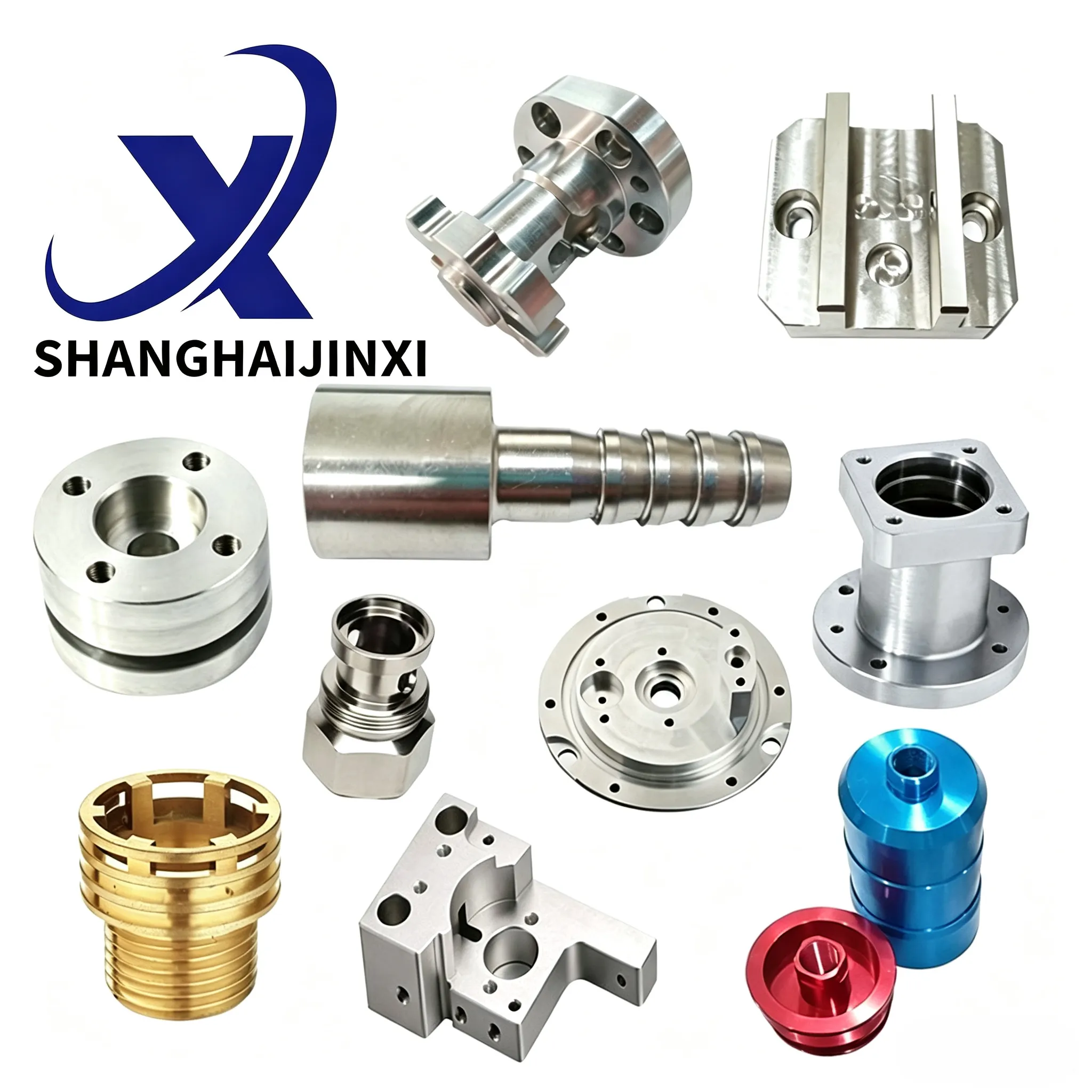
Embodied AI, humanoid robots and high-power liquid-cooled computing infrastructure are defining the next wave of advanced hardware. Demand for custom high-precision structural parts continues to expand rapidly across the whole supply chain, from algorithms and complete machines to upstream mechanical components. Drawing on years of CNC precision machining experience and the IATF16949 quality management system, Shanghai Jinxi Precision Machinery Co., Ltd. has recently secured a growing volume of custom manufacturing projects for cutting-edge sectors. The company delivers complex components including humanoid robot joint structures, dexterous hand parts, liquid cooling cavities and micro-channel cold plates, meeting customer requirements on material selection, micron-level tolerances and diversified surface treatments for both prototype development and mass production.
The industrial ecosystem can be outlined clearly. Embodied AI acts as the “physical brain”: unlike conventional large language models, it perceives real environments via sensors, plans motion autonomously and interacts continuously with the physical world. Humanoid robots are the most representative physical carrier of embodied AI. Their motion accuracy and reliability depend heavily on thin-wall, lightweight, high-stiffness mechanical parts for joint actuators, reducers and dexterous hands. Liquid cooling computing forms the underlying infrastructure. As AI chips keep rising in power density, air cooling can no longer handle high thermal loads. Liquid cold plates, water cooling cavities and sealed channel modules have become standard for cloud computing clusters and high-power robot on-board modules. Dimensional consistency of flow channels, flatness and sealing integrity are critical for long-term system stability. The whole industrial chain, from simulation and training clusters to robot hardware deployment, relies heavily on advanced precision manufacturing.
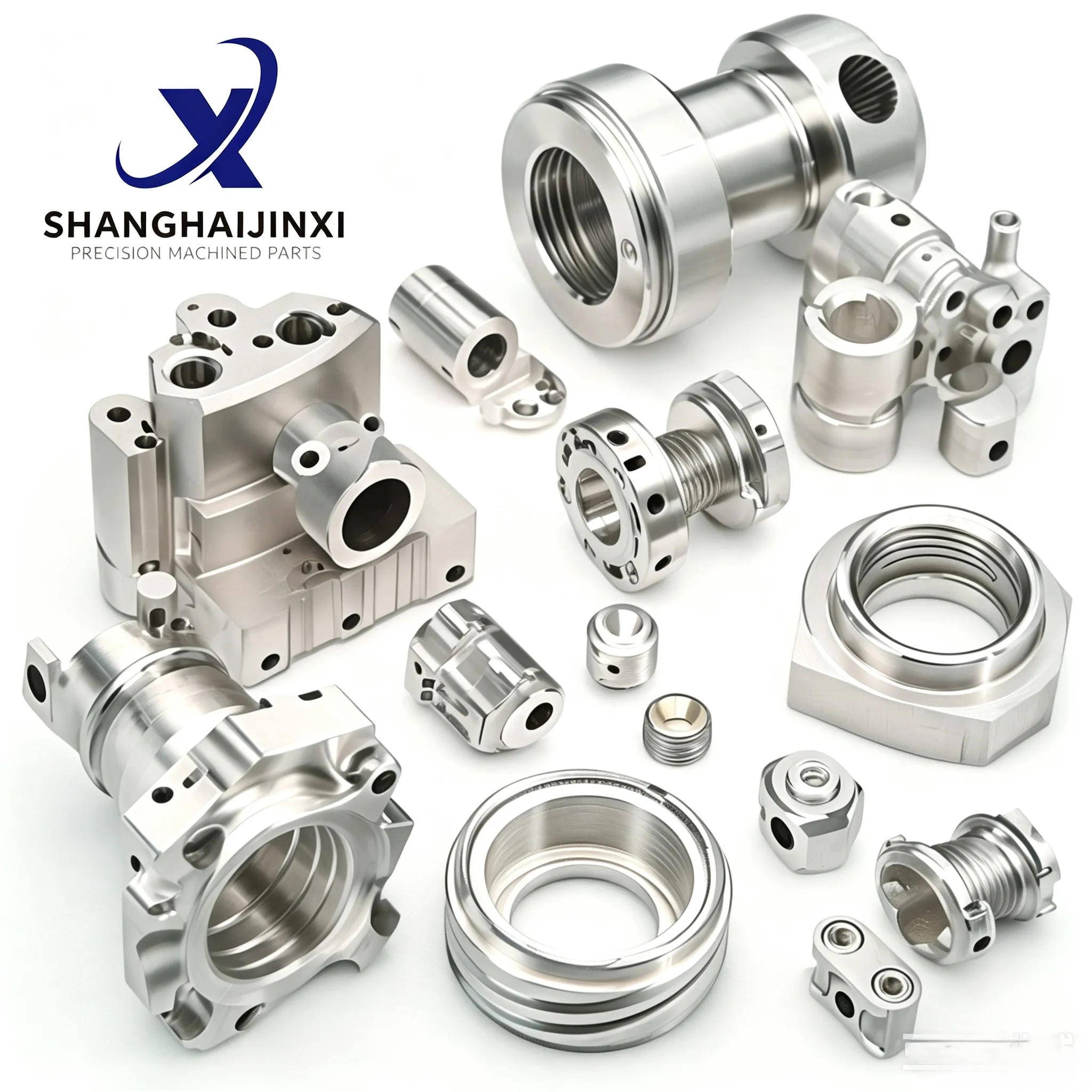
Rapid market growth has raised manufacturing barriers significantly. Humanoid robot joint housings, connecting rods and reducer mounts are mostly made of high-strength aluminum 7075-T6, while some high-load fasteners adopt TC4 titanium alloy. Lightweight brackets and enclosures commonly use 6061-T6. Shafts and pins are usually 40Cr quenched and tempered steel. Wear-resistant and insulating applications rely on PEEK and carbon-fiber reinforced plastics. For liquid cooling systems, standard server cold plates use 6061-T6 or 3003 aluminum, while high-power GPU micro-channel cold plates often employ oxygen-free copper C11000 to balance thermal conductivity and corrosion resistance. Both categories face shared challenges: thin-wall deformation, complex multi-cavity geometry, tight geometric tolerances and ultra-flat sealing surfaces, which demand integrated capability in machine tools, fixturing, stress relief and CMM inspection.
Based in Songjiang District, Shanghai, Jinxi Precision operates a 6,000 m² modern factory equipped with Citizen Swiss-type lathes, Haas and Fanuc multi-axis machining centers, supporting precision machining down to 3 microns. Around 30% of its team consists of engineers with an average of more than ten years of precision manufacturing experience. The company delivers rapid prototyping, low-volume trial runs and mass production. For humanoid robots, Jinxi produces joint housings, output flanges, dexterous hand frames and sensor mounts, controlling bearing bore concentricity, flange flatness and thin-wall distortion. For liquid cooling customers, it manufactures cooling cavities, micro-channel cold plates and manifolds, strictly maintaining flow channel dimensions, sealing groove tolerances and flatness, while supporting auxiliary processes such as brazing and helium leak testing to meet anti-leakage and anti-corrosion standards.
Jinxi Precision reliably processes aluminum 6061/7075, TC4 titanium alloy, 40Cr, stainless steel, PEEK, POM and other metals and high-performance engineering plastics. Surface treatment options include hard anodizing, natural anodizing, nickel plating, passivation and sandblasting, tailored to requirements such as robot weight reduction, liquid cooling anti-galvanic corrosion and assembly wear resistance. Under the IATF16949 framework, the company implements full traceability through incoming material inspection, in-process dimension monitoring and final CMM verification. Having served automotive, medical and high-end equipment customers for years, Jinxi can transfer its proven quality control directly to embodied AI and liquid cooling hardware.
A senior manager at Shanghai Jinxi Precision commented that the industry is moving from proof-of-concept toward scaled deployment. Clients now evaluate suppliers not only on drawing compliance, but also on material expertise, process optimization, consistent yield and agile response. Going forward, Jinxi will continue investing in multi-axis machining, thin-wall component technology and liquid cooling cavity processes, serving the embodied AI and computing hardware supply chain and supporting domestic autonomy for core advanced equipment components.