
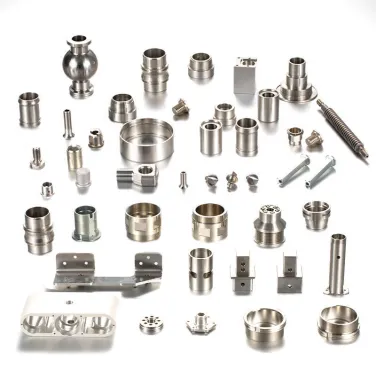
A Perspective on Precision Machining: Mainstream Stainless Steel Classifications and Material Selection Guide for Non-Standard Parts
In the fields of CNC precision machining and custom non-standard parts, stainless steel is one of the most widely used structural materials. Thanks to advantages such as corrosion resistance, high-temperature stability, consistent mechanical properties, and ease of polishing and welding, stainless steel parts are utilized across numerous industries, including automation equipment, medical devices, new energy, chemical processing equipment, and precision instruments.
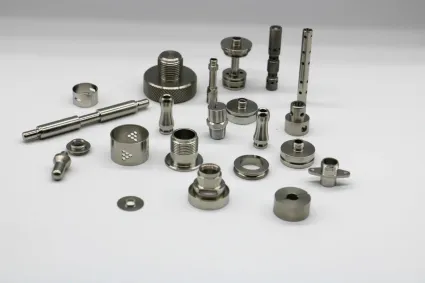
When commissioning custom non-standard parts, clients often encounter issues—such as material-application mismatches, excessive machining costs, or shorter-than-expected part lifespans—due to unfamiliarity with stainless steel classifications. With years of deep experience in CNC precision machining and custom stainless steel parts, Shanghai Jinxi Precision Machinery outlines the core classifications, performance characteristics, and application scenarios of stainless steel from a practical industrial perspective to help you make precise material selections.
In the industrial sector, the primary method of classifying stainless steel is based on its metallographic microstructure. This structure fundamentally determines the material’s machining characteristics and performance in use. Stainless steels are categorized into five main types:
I. Austenitic Stainless Steel: The Workhorse for General Machining
Austenitic stainless steel accounts for over 70% of global stainless steel production and is the most commonly used category for custom precision parts. Alloyed primarily with chromium and nickel, it maintains a stable microstructure at room temperature. It is characterized by non-magnetic properties, high toughness, good ductility, excellent weldability and polishability, and superior corrosion resistance. It cannot be hardened via heat treatment (quenching) and relies on cold working to increase strength.
This material offers stable machinability and is resistant to cracking, making it suitable for parts with complex geometries and high-precision requirements; it also performs excellently at low temperatures. Common grades include 304, 304L, 316, 316L, and 321. Grade 304 is the standard general-purpose choice, while grades 316 and 316L contain added molybdenum, offering superior resistance to acids, alkalis, and pitting corrosion—making them ideal for medical, chemical, and marine applications.
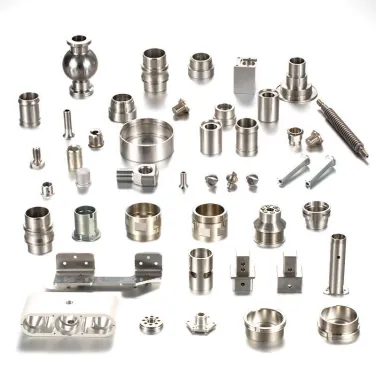
II. Ferritic Stainless Steel: A Cost-Effective Choice for Temperature Resistance
Ferritic stainless steel relies on chromium as its primary alloying element and contains virtually no nickel, offering a significant cost advantage. It is naturally magnetic, possesses better thermal conductivity than austenitic stainless steel, has a low coefficient of thermal expansion, and offers outstanding resistance to high-temperature oxidation; however, its toughness, weldability, and corrosion resistance are inferior to those of 300-series austenitic stainless steel, and it cannot be strengthened through heat treatment.
This material is easy to process and suitable for standard parts that do not require high strength but prioritize basic rust prevention and high-temperature resistance; it is not suitable for applications involving complex bending or high-impact conditions. Common grades include 430, 409, and 439, frequently used for equipment trim, boiler components, structural parts for home appliances, and general non-standard basic components.
III. Martensitic Stainless Steel: Specialized for High Strength and Wear Resistance
The defining characteristic of martensitic stainless steel is that its hardness and strength can be significantly increased through quenching and tempering heat treatments; it offers excellent wear resistance, rigidity, and compressive strength, and is naturally strongly magnetic. However, its corrosion resistance is inferior to that of austenitic stainless steel, and its weldability is average.
It is the material of choice for high-strength, wear-resistant precision parts, offering high dimensional stability and minimal deformation after processing, making it suitable for applications requiring load-bearing capacity, wear resistance, and high rigidity. Common grades include 410, 420, and 440C; it is widely used for precision shafts, valve components, wear-resistant mechanical parts, high-strength fasteners, and mold components.
IV. Duplex and Precipitation-Hardening Stainless Steels: High-End, Specialized Choices
Duplex stainless steel combines austenitic and ferritic microstructures, offering more than twice the strength of standard 304 stainless steel and outstanding resistance to pitting and stress corrosion; representative grades include 2205 and 2507, which are commonly used in harsh environments such as marine engineering and high-pressure chemical equipment. Precipitation-hardening stainless steel achieves ultra-high strength and high dimensional stability through aging treatments that precipitate strengthening phases; a representative grade is 17-4PH, which is suitable for applications demanding extreme precision, such as aerospace and high-end instrumentation. Both are high-end, specialized materials that are difficult to process and place rigorous demands on CNC manufacturing techniques. The market is also frequently categorized by grade series: the 200 series is an economical option that substitutes manganese for nickel; due to its limited corrosion resistance, it is rarely used for precision industrial components. The 300 series represents the mainstream austenitic grades and is the primary choice for precision machining. The 400 series encompasses ferritic and martensitic grades, offering wear resistance, high-temperature stability, and excellent cost-effectiveness.
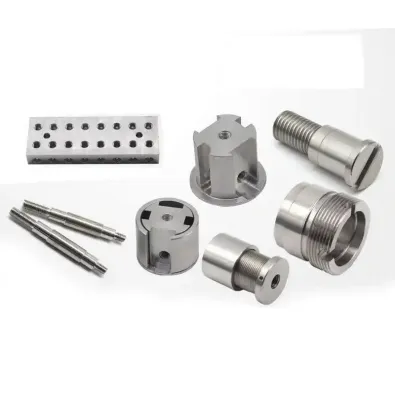
Cutting parameters, heat treatment processes, and surface finishing methods vary significantly across different stainless steel grades, directly impacting component precision, appearance, and service life. Equipped with multi-axis machining centers and a mature process framework, Shanghai Jinxi Precision Machinery has mastered precision machining techniques for the full range of stainless steel grades, ensuring strict control over dimensional tolerances and surface quality.
We can machine stainless steel components from a wide variety of grades; please feel free to contact us with your requirements.