
How to Reduce CNC Machining Costs Without Sacrificing Quality
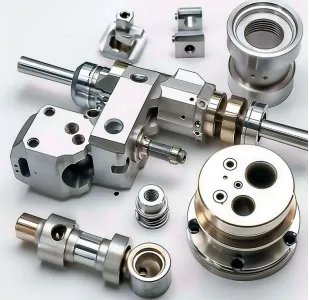
CNC machining is widely used for precision parts in aerospace, medical devices, robotics, automotive components, gears, bearings, and industrial equipment. However, high precision does not always mean high cost. With the right design and production planning, you can reduce machining costs while maintaining reliable quality.
1. Choose the Right Material
Material selection has a major impact on CNC machining cost. Some materials are easier to machine, while others require more time, special tools, or slower cutting speeds.
For example, aluminum is usually easier and faster to machine than stainless steel or titanium. If your part does not require extreme strength or corrosion resistance, choosing a more machinable material can help reduce cost.


2. Avoid Unnecessary Tight Tolerances
Tight tolerances increase machining time, inspection time, and production difficulty. If every dimension is marked with very strict tolerance, the cost will rise quickly.
A better approach is to apply tight tolerances only to critical areas. For non-critical dimensions, standard tolerances are usually enough.
Tip: Use precision where it matters, not everywhere.
3. Simplify the Part Design
Complex structures, deep holes, thin walls, sharp internal corners, and difficult-to-reach features can increase machining time and tool wear.
To reduce cost, keep the design as simple as possible. Larger internal radii, reasonable wall thickness, and fewer complex features can make the part easier and faster to manufacture.
4. Select Suitable Surface Finishing
Surface finishing improves appearance, corrosion resistance, and performance, but it also adds cost. Common finishes include anodizing, polishing, black oxide, plating, and sandblasting.
Choose the finish based on the actual application. If the part is used inside a machine and appearance is not important, a basic machined finish may be enough.
5. Increase Order Quantity When Possible
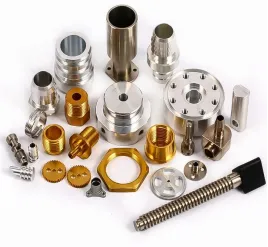
Small orders often have higher unit costs because setup, programming, tooling, and inspection time are shared across fewer parts.
If your project allows, increasing the order quantity can reduce the cost per part. Batch production is usually more cost-effective than producing one or two pieces repeatedly.
6. Provide Complete Drawings and Requirements
Clear drawings help manufacturers quote faster and produce more accurately. Missing information may cause delays, repeated communication, or incorrect production.
To get an accurate quote, provide:
- 2D drawings or 3D CAD files
- Material requirements
- Tolerances
- Surface finish
- Quantity
- Application or special requirements
Conclusion
Reducing CNC machining costs does not mean lowering quality. By choosing the right material, avoiding unnecessary tight tolerances, simplifying the design, selecting suitable finishing, and providing complete drawings, you can control costs while keeping parts accurate and reliable.
At Shanghai Jinxi Precision Machinery, we specialize in custom precision mechanical parts and support drawing-based customization and batch production. We help customers achieve high-quality CNC machined parts with stable delivery and professional service.
Need a CNC machining quote? Send us your drawings and requirements today.